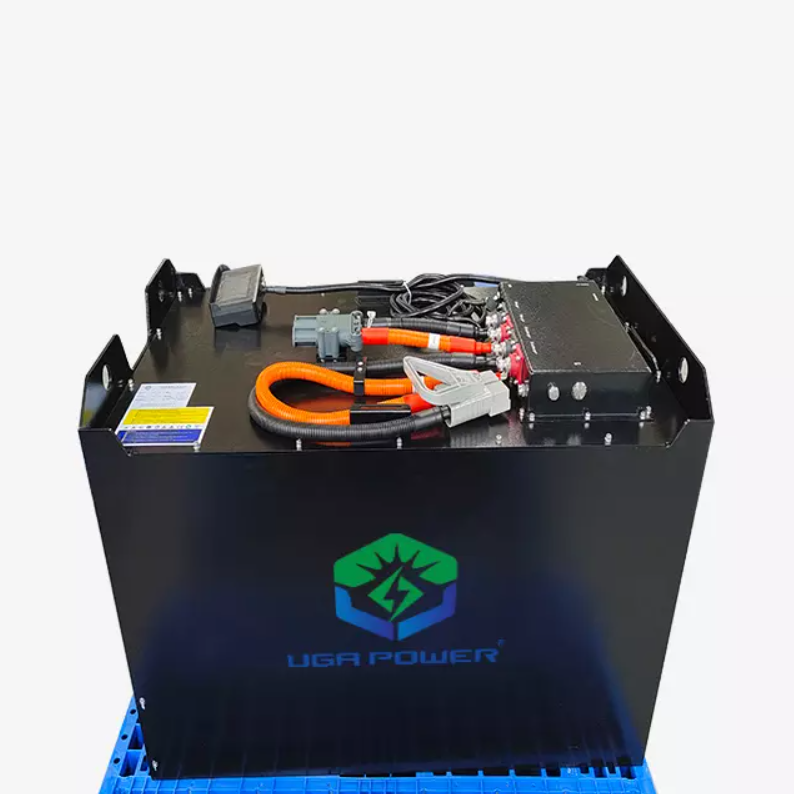
![How Many Ah Is A Forklift Battery?]()
Introduction
A forklift can feel strong, until the battery feels weak. If you pick the wrong size, work slows down and charging gets messy.
So, how many Ah is a forklift battery? In this guide, we explain how forklift batteries are rated, how to read the nameplate, and how to choose the right Ah for your shift, load, and charging plan.
Typical Ah ranges for forklift batteries (by voltage and truck class)
24V forklift batteries: common Ah ranges and where they’re used
You will often see 24V packs in compact equipment. Pallet trucks, walkie stackers, and light warehouse vehicles use them often. Their battery compartments limit capacity choices. In many fleets, 24V forklift batteries sit around 180Ah to 625Ah. Lower Ah suits short routes and light lifts. Higher Ah supports longer routes and fewer charging breaks. If you see a very high Ah at 24V, check the tray size and weight. It may be a custom tray or a different truck class. Always match capacity to the truck rating and the site workflow.
36V forklift batteries: typical Ah and mid-duty use cases
36V systems often cover mid-duty work. They can bridge the gap between small trucks and standard sit-down units. You may see them in narrow-aisle trucks and older fleets. Typical 36V forklift batteries often land around 300Ah to 900Ah. The right value depends on route length, lift intensity, and load weight. Longer travel and frequent lifts push capacity upward. Buyers also need to check charger output and connector type. A 36V charger will not serve a 48V fleet. When you upgrade only the battery, confirm the charger profile first. It prevents heat, faults, and poor battery life.
48V forklift batteries: the most common “middle ground” Ah range
48V is common in many sit-down electric forklifts. It balances power, battery size, and practical runtime. Many 48V forklift batteries fall around 400Ah to 1000Ah. This wide spread reflects wide truck classes. Ah alone can mislead, since energy depends on voltage too. A 48V 600Ah pack stores about twice the energy of a 24V 600Ah pack. For one shift, standard capacity often works. For two shifts, you may need higher Ah or disciplined opportunity charging. Either way, align capacity, chargers, and staffing routines.
80V (and 80V+) forklift batteries: higher Ah for heavy-duty work
Heavy trucks often use 80V systems, sometimes higher. They appear in larger counterbalance forklifts and heavier loads. Typical 80V forklift batteries may range around 620Ah to 1550Ah and above. These packs are physically large and heavy. They also serve as counterweight for stability. Weight can help handling, yet it can stress floors and ramps. Buyers should confirm compartment size, weight limits, and charging infrastructure. They should also confirm that higher voltage matches the truck controller. A wrong match can cause faults and costly downtime. For heavy-duty fleets, right sizing protects both uptime and safety.
Quick “rule of thumb” for matching Ah to your shift length
Start from your shift plan, then work backward. One-shift fleets often choose standard capacity and charge overnight. Two-shift fleets either raise Ah, or they add opportunity charging during breaks. Three-shift fleets often need fast charging access, battery swaps, or a chemistry change. The goal is “enough usable Ah” for stable uptime, not the biggest number on paper.
Voltage | Typical equipment | Common Ah range (needs verification) |
24V | pallet trucks, walkie stackers | 180–625Ah |
36V | mid-duty warehouse trucks | 300–900Ah |
48V | many sit-down electrics | 400–1000Ah |
80V+ | heavy counterbalance trucks | 620–1550Ah+ |
Note: Ah means little without voltage, since energy equals V × Ah.

How to find the Ah rating of your forklift battery
Read the battery nameplate and spec label
The fastest answer sits on the battery label. Most nameplates list voltage (V), capacity (Ah), and often energy (kWh). They may also list weight, chemistry, and a model code. Clean the label area, then take a clear photo. Store it in your maintenance folder, since labels fade. Watch for terms like C5 or C20. They describe the test rate used for the Ah rating. A slower test rate can show a higher Ah value. If you compare quotes, ask vendors to use the same rating basis. It keeps comparisons fair and reduces sizing mistakes.
Decode the model number (when the label is missing)
If the label is missing, model codes can still help. Many lead-acid codes include a cell count. Each cell is about 2V, so it hints at the pack voltage (needs verification). Some codes also encode Ah per cell or plate group. Lithium packs may show series count in the voltage, such as 25.6V or 51.2V. Still, do not guess from a code alone. Collect facts suppliers can verify. Record tray dimensions, connector style, cable length, and total weight. Record the charger model and output voltage too. These details speed up matching and reduce wrong-order risk.
Convert between Ah and kWh for easier comparisons
Ah is useful, but kWh is often clearer for buyers. It lets you compare forklift batteries across different voltages. The simple conversion is kWh = (V × Ah) ÷ 1000. It is an estimate, but it is practical. A 48V 600Ah pack equals about 28.8 kWh. A 24V 600Ah pack equals about 14.4 kWh. This explains why “same Ah” can still give different runtime. Also ask about usable energy, not only nominal energy. Chemistry and BMS limits reduce usable window. When you compare proposals, request both nominal kWh and usable kWh assumptions.
Example pack | Estimated energy |
24V 300Ah | 7.2 kWh |
36V 500Ah | 18.0 kWh |
48V 600Ah | 28.8 kWh |
80V 800Ah | 64.0 kWh |
Tip: Put V, Ah, kWh, and weight on every RFQ line item.
How to calculate the Ah you need for your forklift batteries
Estimate average current draw and required runtime
You can size Ah using a simple process. First, define required runtime per shift in hours. Next, estimate average current draw in typical work. If you have a battery monitor, pull an average from a normal day. If you do not, use proxies. Track lifts per hour, travel distance, and average load weight. Then use a rough relation: Ah needed ≈ average amps × hours. Finally, add margin for peak days and battery aging. This method is not perfect. It is still better than guessing from a neighbor’s truck. It also gives vendors clean inputs for a better recommendation.
Account for usable Ah (not all Ah is “available”)
Nameplate Ah is not always usable Ah. Many lead-acid fleets avoid deep discharge to protect cycle life. A common practice is to keep a reserve, rather than drain to zero (needs verification). Lithium packs often allow deeper use, yet limits still exist. Temperature also reduces usable capacity. Cold storage can cut effective capacity, so a “right-sized” pack can feel small in freezers. Plan a reserve margin for stability. Many buyers add 10% to 20% capacity as buffer. The goal is predictable uptime, not max discharge.
Add a safety buffer without oversizing
A buffer is smart, but oversizing can backfire. Bigger packs cost more and can require more charger power. They also add weight, which changes handling and floor wear. Instead, add a targeted buffer tied to real risk. If winter cuts capacity, size for winter days. If peak season adds hours, size for peak season. Then use charging strategy to cover small gaps. Opportunity charges during breaks can replace extra Ah in many fleets. If your electrical service limits chargers, solve access first. Otherwise, extra Ah may only hide process issues.
Note: Ask vendors for usable capacity assumptions, not only nameplate Ah.
What changes Ah needs in the real world
Battery chemistry differences: lead-acid vs lithium forklift batteries
Chemistry changes how Ah becomes usable work. Lead-acid voltage drops during discharge, so trucks may feel weaker late in the shift. Lithium voltage stays flatter, so it often feels consistent. Lithium also accepts partial charging more easily. This can reduce the need for very high Ah. Lead-acid may suffer if you do frequent partial charges without proper routine. Efficiency differs too. Lead-acid charging losses can be higher, so delivered energy can drop. When you compare packs, focus on uptime outcomes. Look at kWh delivered per shift and charging windows. It keeps decisions grounded in operations.
Discharge rate and temperature effects on effective capacity
High discharge rates can reduce effective capacity. Heavy current draw can deliver fewer usable Ah than the label suggests. This is common during long ramps, heavy lifts, and fast travel. Cold adds another penalty. Capacity drops, internal resistance rises, and charging slows. That can shorten runtime in freezers even when Ah looks correct. Heat creates a different risk. It accelerates aging and reduces long-term capacity. Simple controls help on both ends. Keep charging areas ventilated. Keep connections clean and tight. Track battery temperature during the hardest weeks. It helps you spot risks early.
Charger limits and opportunity charging strategy
Charging behavior can replace capacity in many fleets. If operators can plug in during lunch, a lower Ah pack may still meet the shift. This works best when chargers are available and routines are disciplined. It also fits lithium systems well. Yet opportunity charging fails when stations are crowded or far away. It also fails when charger power is too low. A low-power charger adds little energy during a short break. For planning, map charger locations and time windows. Then model how much energy each break can add. This approach often saves more cost than buying extra Ah.
Tip: Map charger access per truck before you raise Ah targets.
Choosing the right Ah: avoid undersizing and oversizing
Problems caused by undersized forklift batteries
Undersizing creates daily pain fast. Trucks may not finish a shift without extra charging stops. Operators may push packs into deep discharge, which shortens life. They may also rush charging, which raises heat and fault risk. Frequent low-battery events reduce throughput and raise labor cost. In multi-shift fleets, undersizing can force battery swaps and unplanned downtime. It can also raise safety risk if a truck slows on ramps. If you hear repeated “low power” complaints, review the duty cycle. Then compare actual runtime to what the pack should deliver. Fix the root cause, not the symptom.
Problems caused by oversized forklift batteries
Oversizing wastes money and can reduce flexibility. Bigger packs cost more, weigh more, and take longer to charge. They may also require higher power chargers, which raises electrical cost. Extra weight changes tire wear and floor stress. It can also reduce efficiency, since the truck carries unnecessary mass. Some buyers oversize to avoid charging discipline. That may work short term, yet it often hides workflow issues. A better approach is right sizing plus a plan. If you need extra runtime, first ask if better charger access can solve it. Then size up only if access cannot change.
Questions to ask vendors before you buy
Vendor questions protect your budget and your uptime. Ask what assumptions drive their Ah recommendation. Ask for expected runtime under your shift plan and typical loads. Confirm voltage, compartment fit, connector style, and battery weight. Ask how warranty works, by years, cycles, or both. Confirm charger requirements and whether your chargers can stay. Ask about service response time and spare parts availability. Also ask about end-of-life handling and recycling support. If answers are vague, treat it as risk. Clear answers usually signal a supplier that supports B2B operations well.
● What Ah and usable window do you assume for daily use?
● Which charger profile do you require for this pack?
● How is warranty measured, years, cycles, or both?
● What lead time applies for replacements and service parts?
● What runtime do you expect under my duty cycle?
Decision risk | What it looks like | Practical fix |
Undersized capacity | low runtime, deep discharge | add capacity or add charging points |
Oversized capacity | high cost, slow charging | right-size and improve charging routines |
Wrong charger match | heat, faults, poor life | confirm profile and upgrade chargers |
Poor data | inconsistent decisions | log runtime and charge time weekly |
Conclusion
Ah is not a fixed number for every truck. The right Ah depends on voltage, workload, temperature, and your charging windows. If you read the nameplate, convert Ah to kWh, and plan for usable capacity, you can size forklift batteries for steady runtime and lower total cost.
For fleets upgrading to lithium, SUZHOU FOBERRIA NEW ENERGY TECHNOLOGY CO,.LTD. offers LiFePO4 forklift batteries with smart BMS protection, fast charging support, and flexible voltage and capacity customization. They also provide responsive after-sales service to help B2B buyers reduce downtime and simplify fleet planning.
FAQ
Q: How many Ah is a forklift battery on average?
A: Forklift batteries vary by voltage and truck class, so Ah can range widely from smaller 24V units to large 80V packs.
Q: How do I find the Ah of my forklift batteries?
A: Check the battery nameplate for V and Ah, or record the model code, tray size, and connector to confirm specs with a supplier.
Q: Why can two forklift batteries with the same Ah run differently?
A: Forklift batteries can deliver different runtime due to voltage, usable capacity, chemistry, temperature, and how hard the truck draws current.
Q: How do I choose the right Ah for forklift batteries?
A: Size forklift batteries based on shift hours, workload, charging access, and a safe usable margin, not just the biggest Ah number.
Q: What should I do if my forklift batteries don’t last a full shift?
A: Review discharge depth, charger output, cable heat, and charging access, then adjust capacity or add opportunity charging where it fits.