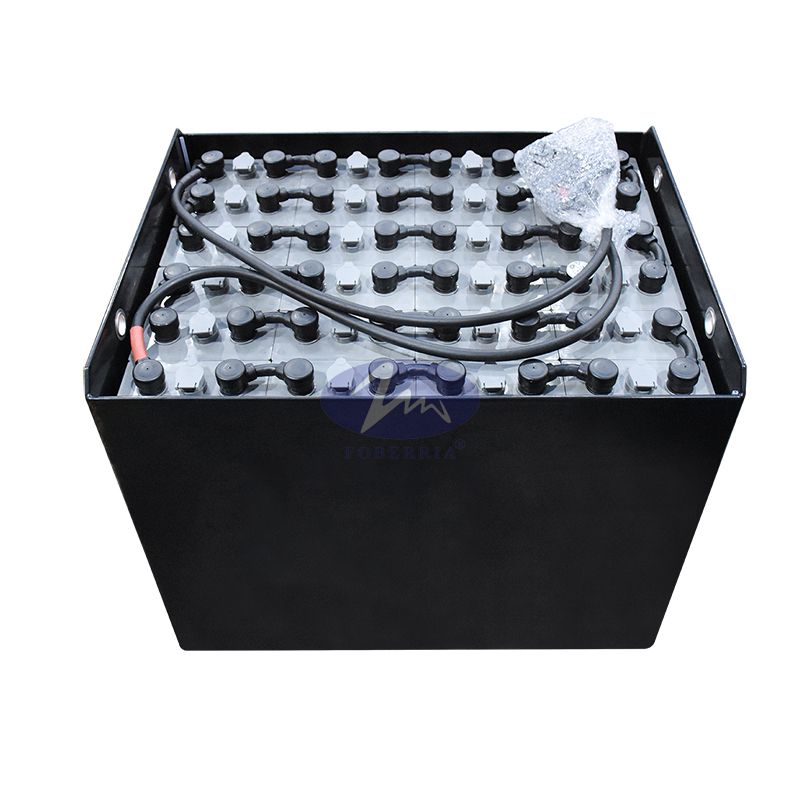
Mismanaging battery water levels remains the leading cause of premature failure in expensive fleet assets. This critical operational error directly impacts your warehouse uptime and severely drives up operating expenses. At first glance, watering seems like basic, foolproof maintenance. Many operators assume they can simply top off the cells and quickly move on to the next task. However, proper frequency and precise timing depend heavily on your specific application intensity. Daily charging habits and the internal battery cell architecture also dictate the correct maintenance schedule. Doing it wrong permanently ruins the equipment.
This guide provides a definitive framework for determining optimal watering intervals across your facility. You will learn how to standardize battery room procedures effectively to prevent costly downtime. We also help you evaluate when to upgrade your hardware to automate the entire fluid replacement process. By mastering these maintenance principles, you protect your heavy-duty investments and drastically streamline daily warehouse operations.
Key Takeaways
Standard Baseline: A typical lead-acid traction battery requires watering every 5 to 10 charge cycles, but heavy-duty multi-shift operations may require weekly checks.
Critical Timing: Water must only be added after a battery is fully charged and cooled, never before or during a charge, to prevent hazardous acid boil-overs.
Technology Impact: Upgrading to an auto watering forklift battery system eliminates manual guesswork, scales easily for large fleets, and guarantees predictable ROI through reduced labor costs and extended asset lifespans.
Chemistry Matters: European standard tubular cells (PzS and PzB) have different electrolyte volume tolerances compared to flat-plate designs, requiring specific maintenance schedules.
The Baseline: Determining the Right Watering Schedule for Forklift Batteries
Establishing a proper maintenance schedule requires you to track actual usage rather than looking at a calendar. Many warehouse managers make the mistake of assigning watering duties to a specific day of the week. This approach often leads to severely over-watered or dangerously dry cells. Instead, you must frame the maintenance schedule around completed charge cycles.
A new, healthy battery generally follows a strict five-to-ten cycle rule. You should check the fluid levels after it completes five full charge and discharge cycles. In a standard single-shift operation, this translates to checking the cells approximately every one to two weeks. However, high-velocity facilities running three shifts per day hit this cycle threshold much faster. Multi-shift operations almost always require mandatory weekly evaluations to keep the equipment running safely.
You also need to account for aging and chemical degradation variables. As batteries age, their internal resistance naturally increases. This elevated resistance causes them to run hotter during both operation and charging. Higher internal temperatures cause the electrolyte fluid to evaporate much faster. Older units consume water rapidly and demand more frequent evaluations. You might find an older fleet requires fluid top-offs every three to five charge cycles to prevent permanent plate damage.
Environmental factors dictate fluid consumption rates as well. Warehouse operating temperatures drastically alter how long the electrolyte lasts. If you operate forklifts in high-heat environments or outdoor yards during summer, evaporation accelerates quickly. Conversely, fleets operating in cold storage or freezer applications experience much slower water consumption. You must adjust your baseline frequency to match the specific thermal realities of your facility.
Timing and Execution: When to Add Water (and When Not To)
Understanding when to open the vent caps is just as important as knowing how often to do it. The post-charge rule stands as the absolute most critical concept in battery maintenance. You must always add water after the unit finishes charging and cools down completely. Never add water before plugging the unit into the charger.
During the charging cycle, the electrolyte fluid undergoes chemical expansion. The mixture heats up and physically expands inside the cell casing. If you fill the cells to the brim before charging, this natural expansion pushes the dangerous sulfuric acid out of the vent caps. This acidic spillover leads to severe terminal corrosion, damages the steel battery tray, and causes a permanent loss of capacity. Once you lose the active acid, you can never replace it with just water.
Operators must rely on specific visual indicators to execute this properly. Here is exactly what your technicians should look for:
Prior to charging: The fluid level should sit just below the vent well. The internal lead plates must remain completely submerged in fluid. If you expose the plates to air before charging, you risk catastrophic damage.
After charging: Once the unit cools, check the levels again. You should fill the cells until the fluid rests roughly a quarter of an inch above the internal splash guard. Do not fill them all the way to the absolute top of the plastic casing.
Finally, water quality standards dictate the long-term health of your assets. You must explicitly use deionized or distilled water for all maintenance tasks. Standard tap water contains harmful minerals like calcium, magnesium, and iron. Introducing these hidden impurities into the cells coats the delicate active lead plates. Mineral buildup rapidly degrades power output, ruins charge retention, and destroys the internal chemistry.
How Cell Design Impacts Maintenance: PzS, PzB, and Standard Lead-Acid Traction Batteries
The internal architecture of your equipment largely dictates how often you need to schedule maintenance. A standard lead-acid traction battery utilizes different plate designs depending on its origin and intended industrial application. We categorize these primarily into tubular and flat plate designs. Flat plate designs offer excellent initial power delivery but often contain less total electrolyte volume. This lower fluid volume typically means they dry out faster under heavy operational strain.
European standard tubular cells behave differently. The PzS forklift battery utilizes the DIN standard tubular plate design. Manufacturers build these specific cells to hold a robust volume of fluid alongside dense active material. Because the PzS design features a larger physical cell footprint, it retains much more electrolyte. This high capacity and deep fluid reserve allow the unit to withstand intense, heavy-duty applications without needing constant manual intervention. Operators generally find PzS models offer highly predictable and slightly extended maintenance intervals compared to standard flat plates.
On the other hand, the PzB forklift battery features the British Standard (BS) cell design. These models share the durable tubular construction of the PzS but utilize a much more compact physical footprint. Manufacturers design PzB cells for forklifts with tighter, narrower battery compartments. Because they are physically slimmer, they simply cannot hold the same massive volume of electrolyte as a wider DIN cell.
Fleet managers must evaluate these structural differences carefully. If your facility runs PzB units, you must monitor them more closely than PzS models under the exact same multi-shift workload. Their narrower profile means their fluid reserves deplete faster. Providing your maintenance team with clear criteria regarding these cell standards ensures they apply the correct spatial and operational maintenance schedules across the entire fleet.
The Business Cost of Poor Watering Practices (Risk & ROI Assessment)
Treating fluid maintenance as an afterthought creates massive financial liabilities for your warehouse. Poor practices destroy expensive assets long before they reach their engineered lifespan. You must view correct maintenance through a strict operational risk and return-on-investment lens.
Under-watering presents the most immediate risk to your equipment. When electrolyte levels drop too low, the active lead plates become exposed to ambient air. This exposure triggers a rapid chemical reaction known as sulfation. The lead active material crystallizes and hardens permanently. Once sulfation occurs, it irreversibly chokes off the internal power flow. You will experience severely reduced runtimes. Your operators will complain about forklifts dying halfway through a shift. Ultimately, severe sulfation forces you into premature replacement costs, destroying your expected ROI.
Conversely, over-watering destroys value just as quickly. When technicians overfill the cells, they cause dangerous acid dilution. Pushing fluid past the recommended fill line reduces the specific gravity of the electrolyte. Diluted acid severely cripples power output, making the forklift sluggish when lifting heavy pallets. Furthermore, overfilling leads directly to acid boil-overs during the next charge cycle. These highly corrosive spills destroy battery trays, ruin the steel internal components of the forklift, and cause dangerous slip hazards on your warehouse floor.
Beyond chemical damage, you face a massive labor drain. Manual maintenance consumes incredible amounts of operational time. We can quantify this hidden labor cost easily.
Table: The Hidden Costs of Manual Battery Maintenance
Maintenance Practice
Immediate Consequence
Long-Term Business Impact
Manual jug pouring across 10+ units
Takes 15-20 minutes per unit per week.
Wastes over 150 hours of skilled technician labor annually.
Inconsistent fill levels
Cells dry out or boil over unpredictably.
Increases OPEX due to rapid capacity loss and acid cleanup.
Skipping maintenance cycles
Plates undergo rapid, permanent sulfation.
Forces early capital expenditure for replacement units.
If you operate a fleet of just 10 forklifts, manual watering drains valuable technician hours every single month. Paying a skilled operator to carefully pour fluid from a pitcher represents a highly inefficient use of their technical expertise. You lose money on labor while simultaneously risking human error during the fill process.
Evaluating the Auto Watering Forklift Battery System
To eliminate these escalating labor costs and safety risks, many modern warehouses transition away from manual processes entirely. Upgrading to an auto watering forklift battery system removes human guesswork from the equation. We typically evaluate these upgrades by comparing single-point watering systems (SPWS) directly against traditional manual watering wands and pitchers.
Manual wands require the operator to open every single vent cap across a heavy 24-cell or 36-cell unit. They peer inside with a flashlight and guess when the fluid hits the correct line. Single-point solutions eliminate this tedious routine.
Let us look at a features-to-outcomes evaluation:
Feature: Gravity-fed or pressurized closed-loop tubing. These systems connect every individual cell via a network of durable plastic hoses. They utilize specialized mechanical float valves inside each vent.
Outcome: Precise fill levels every time. When the operator connects the main hose, water flows freely until the exact optimal level is reached. The internal floats shut off the flow automatically. You get identical, perfect fill levels for every cell without operator guesswork.
These systems excel in scalability and fleet management. A single-point system enables one operator to water a massive industrial unit in under a minute. They simply click a quick-connect fitting into place, watch a flow indicator spin, and disconnect when it stops. If you manage a fleet of 20, 50, or 100 machines, this speed makes SPWS a critical upgrade for scaling your operation efficiently.
When shortlisting solutions, apply a basic threshold logic to justify the capital expenditure. You should strongly consider retrofitting or purchasing automated systems if your fleet exceeds five multi-shift forklifts. You should also pull the trigger if your facility suffers from high turnover rates in maintenance staff. Automated systems require virtually no specialized training, instantly protecting your assets from inexperienced new hires.
Safety, Compliance, and Implementing Battery Room SOPs
Handling industrial energy storage requires strict adherence to safety protocols. You deal with immense electrical voltage and highly corrosive chemicals daily. OSHA and general industrial safety standards outline strict baseline compliance requirements for battery handling areas. You must design your maintenance areas to mitigate chemical risks.
Your facility must provide dedicated eyewash stations within a 10-second walking distance of the charging racks. Proper mechanical ventilation is also non-negotiable. Charging releases volatile hydrogen gas, which can ignite if allowed to pool in stagnant air. Your charging room requires exhaust fans calibrated to cycle the air frequently to maintain safe atmospheric levels.
Furthermore, operators must wear required personal protective equipment (PPE) before ever touching a vent cap or filling hose. Non-negotiable protective gear includes:
Acid-resistant aprons: To prevent chemical burns to the torso and legs during accidental splashes.
Face shields: Standard safety glasses are insufficient. You need a full face shield to protect the eyes and skin from pressurized acid bursts.
Thick rubber gloves: Standard mechanic gloves soak up liquids. You must use elbow-length neoprene or rubber gloves to block chemical transfer.
Even with perfect equipment, rollout lessons from top facilities show that process accountability matters most. Implementing an automated system fails if nobody remembers to hook up the hose. You must establish a strictly logged, accountable schedule. We recommend utilizing fleet management software to trigger mandatory alerts after specific charge cycles. If you lack software, mount physical logbooks on every charger. Making technicians initial and date the logbook ensures that this critical maintenance never slips through the cracks.
Conclusion
Optimal forklift maintenance relies entirely on balancing correct frequency, precise timing, and standardized processes. You cannot guess when your equipment needs fluid, nor can you afford to let inexperienced operators overfill the cells. Protecting your power assets means adhering to usage-based schedules and always adding fluid strictly after the charge cycle completes.
To secure your warehouse efficiency, take action on these next steps immediately. First, audit your current watering logs to see if your technicians actually follow a cycle-based routine. Next, perform a visual health assessment of your existing lead-acid inventory to check for signs of dry plates or acid spillage. Finally, evaluate single-point automated upgrades for your busiest machines. Automating this process protects your heavy assets, ensures safety compliance, and reclaims hundreds of hours of wasted labor.
FAQ
Q: Can I use tap water in a forklift battery?
A: No. You must never use standard tap water. Tap water contains dissolved minerals like calcium, magnesium, and iron. When introduced to the cells, these minerals coat the internal lead plates and alter the chemical balance. This mineral buildup causes rapid performance degradation, shortens runtimes, and permanently damages the equipment. Always use distilled or deionized water.
Q: What happens if a forklift battery boils over?
A: When an overfilled unit boils over, it pushes highly corrosive sulfuric acid out of the vents. This acid damages the internal steel tray, ruins warehouse floors, and creates a hazardous slip risk. You must immediately neutralize the spill using specialized acid spill kits or a baking soda solution. After neutralizing, clean the area thoroughly to prevent further asset corrosion.
Q: How long does it take to water a forklift battery manually vs. automatically?
A: Manually opening, checking, and filling a standard 24-cell or 36-cell unit takes an experienced technician roughly 15 to 20 minutes per machine. In contrast, an automated single-point watering system requires the operator to simply snap a hose into place. The automated system fills all cells simultaneously to precise levels in under one minute.
Q: Why is my forklift battery using so much water?
A: Excessive fluid consumption usually points to a few common culprits. The unit may be nearing its end-of-life, causing high internal resistance and excessive heat during charging. Alternatively, your chargers might be improperly calibrated, leading to aggressive overcharging and boiling. Finally, operating the equipment in extreme heat drastically accelerates natural evaporation rates.