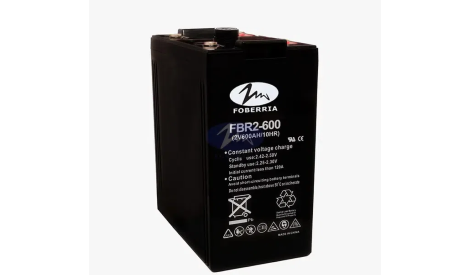
A lithium battery is a rechargeable energy-storage system that provides electrical power for equipment, vehicles, and energy-storage applications. Lithium batteries are widely used in electric forklifts, warehouse vehicles, traction equipment, golf carts, cleaning machines, patrol vehicles, and commercial energy-storage systems.
In industrial environments, battery performance directly affects equipment availability, operating efficiency, maintenance costs, and production continuity. For this reason, businesses need to consider more than just battery voltage and capacity. Battery chemistry, charging requirements, dimensions, weight, connectors, communication systems, and operating conditions must also be evaluated.
Compared with traditional lead-acid batteries, lithium batteries can provide faster charging, longer cycle life, stable discharge performance, and lower routine maintenance. These advantages make them suitable for equipment that operates frequently or requires reliable power throughout the working day.
FOBERRIA provides industrial battery solutions covering lithium batteries, lead-acid batteries, traction batteries, stationary batteries, UPS batteries, replacement batteries, and selected OEM/ODM battery projects. Its lithium battery products include LiFePO4 forklift batteries, golf cart batteries, cleaning machine batteries, lithium storage batteries, and prismatic LiFePO4 cells.
What Is a Lithium Battery?
A lithium battery stores and releases electrical energy through the movement of lithium ions between two electrodes.
During the charging process, lithium ions move from the positive electrode to the negative electrode, where energy is stored. During discharging, the ions move back toward the positive electrode. This movement produces electrical current that powers the connected equipment.
A rechargeable lithium battery pack normally contains several important components:
Battery cells
Positive and negative electrodes
Electrolyte
Separator
Battery Management System
Protective housing
Terminals, cables, and connectors
The Battery Management System, commonly called the BMS, is particularly important for industrial lithium batteries. It monitors voltage, current, temperature, and battery status. Depending on the battery design, the BMS can help protect against overcharging, over-discharging, overcurrent, overheating, and other abnormal operating conditions.
A lithium battery is not only a group of cells. The complete battery system must be designed to work with the equipment, charger, control system, and working environment.
How Does a Lithium Battery Work?
Lithium batteries operate through a reversible charging and discharging process.
When the battery is connected to a compatible charger, electrical energy is transferred into the battery. The lithium ions move toward the negative electrode, and the battery stores energy.
When the battery powers a forklift, vehicle, cleaning machine, or storage system, the lithium ions move back toward the positive electrode. The battery then supplies electrical current to the equipment.
The battery management system continues monitoring the battery during both charging and discharging. This helps maintain stable operation and provides protection when the battery operates outside its specified conditions.
The actual service life of a lithium battery depends on several factors, including battery chemistry, depth of discharge, charging method, temperature, equipment load, and operating frequency.
What Is a LiFePO4 Battery?
LiFePO4 stands for Lithium Iron Phosphate. It is a lithium battery chemistry commonly used in industrial and commercial applications.
LiFePO4 batteries are widely selected for industrial equipment because they can provide:
FOBERRIA’s lithium battery business focuses on practical industrial applications rather than only portable consumer batteries. Its product range includes LiFePO4 batteries for forklifts, golf carts, cleaning equipment, and energy-storage systems. The company also supplies prismatic LiFePO4 cells for battery-pack assembly and customized projects.
The performance of each battery depends on the specific model and application. Therefore, buyers should confirm the technical specifications before selecting a battery for a particular machine or vehicle.
Lithium Battery Compared with Lead-Acid Battery
Lithium and lead-acid batteries are both used in industrial power systems. FOBERRIA supplies both battery technologies, allowing customers to select a suitable solution according to their equipment and operating requirements.
| Feature | Lithium Battery | Lead-Acid Battery |
| Charging | Supports faster charging options | Usually requires a longer charging period |
| Maintenance | Low routine maintenance | May require water refilling or equalization |
| Energy efficiency | Generally high | Generally lower |
| Weight | Usually lighter for comparable applications | Usually heavier |
| Cycle life | Depends on model and operating conditions | Depends on battery type and usage |
| Initial cost | Often higher | Often lower |
| Long-term operation | May reduce maintenance and replacement costs | May involve more maintenance requirements |
Lithium batteries are not automatically the best choice for every project. Lead-acid batteries remain suitable for many traction, stationary, UPS, and backup-power applications.
Industrial Applications of Lithium Batteries
Forklift and Traction Batteries
Electric forklifts, warehouse vehicles, and industrial traction equipment often operate for long hours and require frequent charging. Battery performance directly affects material-handling efficiency and warehouse productivity.
FOBERRIA provides LiFePO4 forklift battery solutions for electric forklifts and industrial logistics applications. Depending on the selected model, these batteries can support fast charging, maintenance-free operation, stable power output, and reduced battery-swapping requirements.
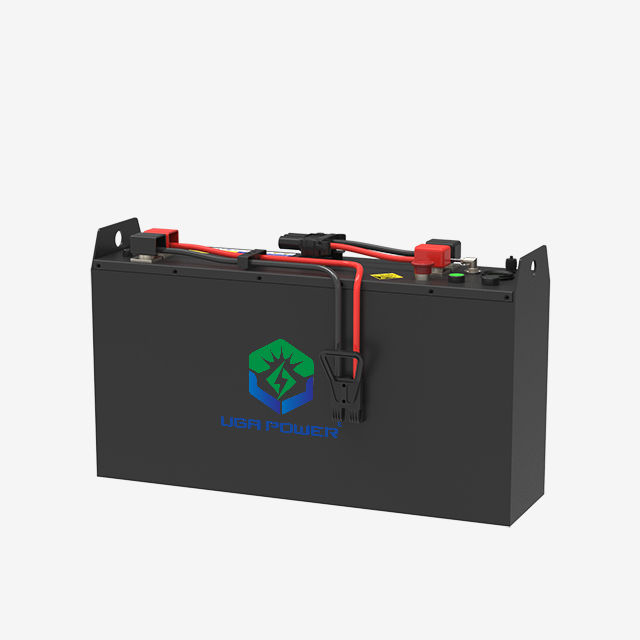
Before ordering a forklift battery, the following information should be confirmed:
FOBERRIA also provides lead-acid traction batteries, including PzS DIN and PzB BS battery types. These batteries are used for forklifts, transport vehicles, mining equipment, and other industrial traction applications.
More information can be found on the forklift and traction battery solutions page.
Golf Cart and Electric Vehicle Batteries
Lithium batteries are used in golf carts, sightseeing vehicles, patrol vehicles, and other electric utility vehicles.
A suitable golf cart battery must match the vehicle’s electrical system. Important factors include battery voltage, capacity, dimensions, charger type, motor, controller, connector, and available installation space.
FOBERRIA supplies LiFePO4 batteries and lead-acid battery options for selected golf cart and electric vehicle applications. Lithium batteries may help reduce vehicle weight and routine maintenance while providing stable power during daily operation.
However, a higher-voltage battery should not be installed without confirming compatibility with the vehicle motor, controller, charger, and wiring system.
Cleaning Machine Batteries
Floor scrubbers, sweepers, and other commercial cleaning machines often operate in warehouses, factories, airports, shopping centers, and public facilities.
FOBERRIA offers LiFePO4 batteries for cleaning machines in different voltage and capacity configurations. These batteries are designed for applications that require stable power, repeated charging, and low routine maintenance.
The correct cleaning machine battery depends on:
Selecting the correct battery can help cleaning-equipment operators reduce charging interruptions and simplify battery management.
Lithium Storage Batteries
Lithium batteries are also used in solar systems, backup power systems, and commercial or industrial energy-storage applications.
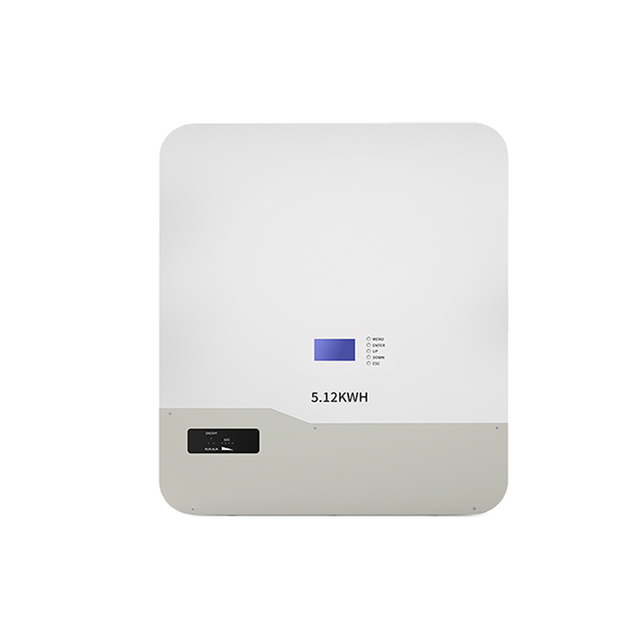
FOBERRIA’s lithium storage battery categories include 12.8V lithium batteries, 48V rack batteries, and 51.2V wall-mounted battery systems. The correct configuration depends on the required system voltage, energy capacity, inverter, installation space, and backup-time requirements.
Customers should confirm the following before ordering a storage battery:
FOBERRIA also provides lead-acid stationary batteries, AGM batteries, GEL batteries, OPzV batteries, OPzS batteries, and VRLA UPS batteries for different backup and energy-storage applications. The full product range is available on the FOBERRIA product page.
Prismatic LiFePO4 Cells
Prismatic LiFePO4 cells are used for battery-pack assembly and customized energy-storage projects.
When selecting cells, customers should consider the target pack voltage, required capacity, series-parallel configuration, installation space, BMS design, charging system, discharge current, and operating environment.
Cell capacity alone is not enough to determine whether a battery pack will be suitable. The complete electrical, mechanical, thermal, and protection design must be evaluated.
How to Choose the Right Lithium Battery
The correct lithium battery should be selected according to the actual equipment and working conditions.
Confirm the Application
First, identify the equipment that the battery will power. Forklifts, golf carts, cleaning machines, electric vehicles, and storage systems use different battery designs and specifications.
Match the Voltage and Capacity
Battery voltage must match the equipment electrical system. Capacity determines the expected operating time before recharging.
A higher-capacity battery may provide longer operation, but it may also require more installation space, greater weight, or a different charging system.
Check Dimensions and Weight
The battery must fit the available installation space. For forklifts and traction equipment, battery weight and tray dimensions may also affect safe equipment operation.
Confirm Charger Compatibility
The charger must provide the correct voltage and charging profile. When replacing a lead-acid battery with a lithium battery, the original charger should only be reused after compatibility has been confirmed.
Consider the Operating Environment
Temperature, vibration, dust, working hours, charging frequency, and equipment load can all affect battery performance. The battery should be selected according to the actual application environment.
Battery Replacement and OEM/ODM Services
FOBERRIA provides battery replacement solutions for industrial traction equipment, electric vehicles, cleaning machines, backup power systems, and energy-storage applications.
Customers can provide the existing battery model, voltage, capacity, dimensions, weight, connector information, charger details, equipment model, and clear battery photographs. FOBERRIA can then review the available battery type and confirm compatibility.
The company also provides selected OEM and ODM services for lithium and lead-acid battery projects. Available services may include customer logo application, private-label branding, customized packaging, product labels, voltage and capacity review, battery-pack configuration, terminal design, and BMS review.
Customization depends on the selected product, application, order quantity, and technical requirements. More information is available through the OEM/ODM battery solutions page.
Frequently Asked Questions
Can a lead-acid battery be replaced with a lithium battery?
It may be possible, but the replacement is not automatically direct. Voltage, capacity, dimensions, weight, charger, connectors, and communication requirements must be checked.
Can lithium batteries be used in forklifts?
Yes. LiFePO4 forklift batteries are used in electric forklifts and industrial traction equipment when the battery is correctly matched to the equipment.
How long does a lithium battery last?
Service life depends on battery chemistry, depth of discharge, charging method, temperature, equipment load, and working conditions.
Does FOBERRIA provide customized lithium batteries?
FOBERRIA provides OEM and ODM services for selected battery products, including branding, packaging, and certain technical customization options.
Conclusion
Lithium batteries provide rechargeable power for forklifts, traction equipment, golf carts, cleaning machines, electric vehicles, and energy-storage systems.
The correct battery must be selected according to the application, voltage, capacity, dimensions, weight, charger, connectors, BMS, and operating environment.
FOBERRIA supplies lithium batteries, lead-acid batteries, traction batteries, stationary batteries, UPS batteries, replacement solutions, and selected OEM/ODM battery services for industrial and commercial customers. Businesses can contact FOBERRIA for battery selection, compatibility confirmation, and customized project support.


