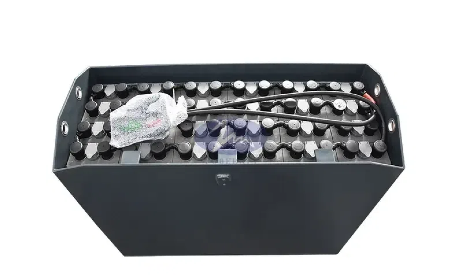
Choosing the right lithium battery is not only about selecting voltage and capacity. For industrial equipment, the Battery Management System (BMS) is equally important because it controls, monitors, and protects the battery during charging and operation.
A suitable BMS helps prevent overcharging, over-discharging, excessive current, overheating, and other abnormal conditions. It also helps maintain cell balance and provide reliable battery performance over time.
However, different applications have different power demands. A forklift, floor cleaning machine, golf cart, electric vehicle, and energy storage system may require completely different BMS specifications. The correct choice should be based on the complete battery system, including the cells, charger, equipment, operating environment, and communication requirements.
This guide explains how to choose a lithium battery with the right BMS for industrial and commercial applications.
What Is a Battery Management System?
A Battery Management System is an electronic control system used to monitor and protect a lithium battery pack. It collects information from the battery cells and controls the battery according to preset safety parameters.
The main functions of a BMS include:
Overcharge protection
Over-discharge protection
Overcurrent protection
Short-circuit protection
Cell voltage monitoring
Temperature monitoring
Cell balancing
State-of-charge monitoring
Communication with external equipment on applicable models
The BMS does not replace the battery charger or the equipment controller. Instead, it works with these systems to maintain safe and stable battery operation.
For industrial lithium batteries, the BMS should be selected as part of the complete battery design. A BMS with an unsuitable voltage, current rating, or communication protocol may cause unexpected shutdowns, charging problems, or reduced battery life.
1. Match the BMS to the Battery Chemistry
The first step is confirming the battery chemistry. Lithium batteries use different chemistries, and each chemistry has its own charging and protection requirements.
Lithium Iron Phosphate, commonly known as LiFePO4, is widely used in industrial applications because of its stable performance, long cycle life, and good thermal stability. It is commonly used in forklifts, cleaning machines, golf carts, electric vehicles, and energy storage systems.
The BMS must be designed for the selected chemistry. A BMS designed for one lithium chemistry should not automatically be used with another type of battery.
When evaluating the battery chemistry, consider:
Nominal cell voltage
Maximum charging voltage
Minimum discharge voltage
Recommended charging current
Operating temperature
Required protection limits
Expected cycle life
Matching the BMS to the battery chemistry helps ensure that the battery is charged and discharged within the correct operating range.
2. Match the BMS to the Series Configuration
The BMS voltage must match the number of cells connected in series. A lithium battery pack may use different series configurations to achieve different system voltages.
Common industrial battery configurations include:
12.8V
25.6V
38.4V
48V
51.2V
The exact configuration depends on the cell voltage and battery design. For example, a LiFePO4 battery pack may use multiple 3.2V cells connected in series to achieve a higher nominal voltage.
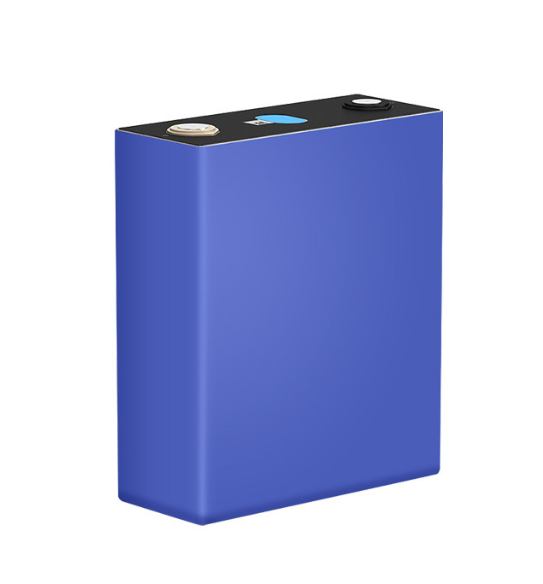
FOBERRIA provides lithium battery products and prismatic LiFePO4 cells for different industrial applications. During battery design, the cell configuration and BMS parameters must be matched precisely.
Using a BMS with the wrong series voltage can result in inaccurate cell monitoring, incorrect charging control, or battery damage. The battery voltage, cell quantity, BMS voltage, charger output, and equipment requirements should always be checked together.
3. Select the Correct Current Rating
Battery capacity and BMS current rating are not the same thing.
Capacity is measured in ampere-hours (Ah) and indicates how long a battery can supply energy. The BMS current rating indicates how much current the battery can safely deliver or accept.
The correct BMS should support both the continuous current and the peak current of the equipment.
Consider the following requirements:
For example, an electric forklift may require a high current during lifting, acceleration, or operation on an incline. A cleaning machine may experience changing loads when the brush motor, suction motor, and water pump operate together.
If the BMS current rating is too low, the battery may shut down during peak demand. If the rating is selected without considering the battery cells, cables, connectors, and protection settings, the complete system may not operate reliably.
The BMS should therefore be selected according to the actual equipment load rather than battery capacity alone.
4. Check Charger Compatibility
The charger is another important part of the battery system. Lithium batteries require a suitable charging profile, voltage, and current.
A charger used for a lead-acid battery should not automatically be connected to a lithium battery unless compatibility has been confirmed. The charging voltage, charging curve, connector, and communication requirements may be different.
Before choosing a BMS, confirm:
Charger output voltage
Maximum charging current
Battery charging profile
Connector type
Connector polarity
Charging cut-off settings
Communication between the charger and BMS
Charging time and operating schedule
The BMS can interrupt charging when a protection limit is reached, but the charger must still be compatible with the battery chemistry and voltage.
When replacing an existing battery, the battery and charger should be evaluated together. FOBERRIA’s battery replacement solutions consider voltage, capacity, dimensions, terminals, connectors, and charging requirements to help customers confirm compatibility.
5. Consider Temperature Protection
Temperature affects lithium battery safety, charging performance, and service life.
A suitable BMS should monitor the temperature of the battery pack and, where applicable, individual areas or cells. Depending on the model and working environment, the BMS may need to provide protection against:
High-temperature charging
High-temperature discharging
Low-temperature charging
Excessive internal temperature
Abnormal temperature differences
Overheating caused by high current
Temperature protection is particularly important for batteries used in factories, warehouses, outdoor vehicles, and equipment that operates for long periods.
The required temperature range depends on the battery chemistry, cell type, enclosure design, cooling method, and application. For this reason, temperature specifications should be confirmed with the supplier before selecting the final battery and BMS.
6. Confirm Communication Requirements
Some lithium battery systems need to communicate with a charger, vehicle controller, inverter, or energy management system.
Depending on the applicable product and project, communication functions may include:
CAN communication
RS485 communication
Remote monitoring
State-of-charge information
Battery fault alarms
Voltage and temperature data
Charge and discharge status
Communication can be useful for forklift fleets, energy storage systems, and equipment that requires real-time battery information.
Not every battery needs advanced communication. A simple battery may only require basic protection, while a larger industrial system may need data exchange with the machine or energy management system.
The communication protocol should be confirmed before purchase. It is not safe to assume that every BMS supports CAN, RS485, Bluetooth, or remote monitoring.
7. Choose the BMS According to the Application
Different applications place different demands on the battery.
Forklifts and Material Handling Equipment
Forklift batteries must provide stable power for driving, lifting, and repeated daily operation. The BMS should be matched to the forklift voltage, motor current, peak load, battery compartment, charger, and working schedule.
Forklift users should also check battery dimensions, terminal position, cable arrangement, and equipment weight requirements.
FOBERRIA supplies LiFePO4 forklift battery solutions for different voltage, capacity, and industrial equipment requirements.
Cleaning Machines
Floor scrubbers and industrial cleaning machines may operate for several hours and use multiple motors simultaneously. Their battery and BMS should support stable discharge performance and repeated daily charging cycles.
The system should be evaluated according to:
Machine voltage
Brush motor power
Suction motor power
Daily working time
Charging frequency
Battery compartment size
Required operating range
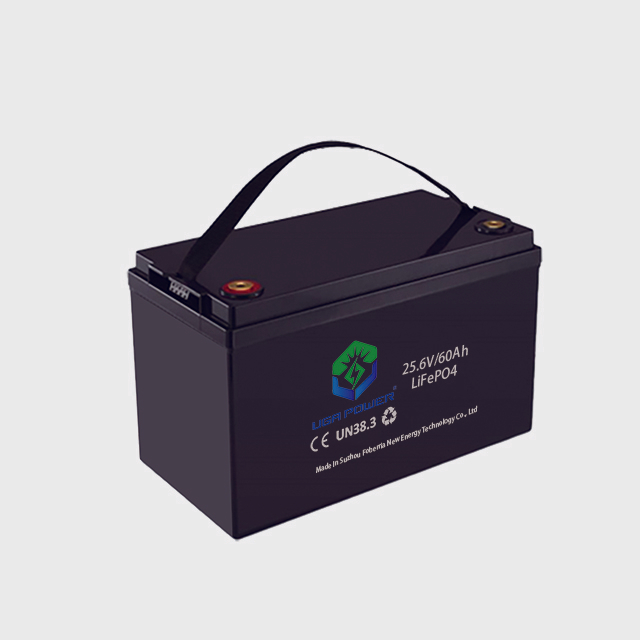
FOBERRIA provides LiFePO4 batteries for cleaning machines, with solutions for different equipment voltage and capacity requirements.
Golf Carts and Electric Vehicles
Golf carts and electric vehicles require a BMS that can handle acceleration current and repeated charge-discharge cycles. Battery selection should consider vehicle weight, driving range, motor power, charger compatibility, and available installation space.
Where applicable, regenerative charging and communication with the vehicle controller should also be confirmed.
Energy Storage Systems
Energy storage systems may operate continuously and require accurate monitoring of voltage, temperature, state of charge, and charging status.
The BMS may need to communicate with an inverter or energy management system. Battery capacity, installation environment, charging source, backup requirements, and system expansion should be considered together.
FOBERRIA offers lithium storage battery solutions for different storage configurations and commercial applications.
Information to Provide the Battery Supplier
To select the right battery and BMS, provide the supplier with:
Equipment model
Required voltage
Required capacity
Motor or load specifications
Continuous and peak current
Daily operating hours
Charger information
Battery dimensions
Connector and terminal details
Working temperature
Communication requirements
Existing battery photos or specifications
The more complete the information, the more accurately the supplier can recommend the battery configuration and BMS settings.
For selected customized projects, FOBERRIA provides OEM and ODM solutions, including support for battery configuration, dimensions, terminals, branding, and applicable BMS settings.
Frequently Asked Questions
Is a BMS necessary for a lithium battery?
For a complete lithium battery pack, a suitable BMS is an important part of battery protection, monitoring, and control.
Can one BMS be used for different lithium batteries?
Not necessarily. The BMS must match the battery chemistry, series configuration, current requirements, temperature range, and communication system.
Does a higher-rated BMS always provide better performance?
No. The BMS should match the actual battery and equipment requirements. An unsuitable rating may reduce protection accuracy or create compatibility problems.
Conclusion
Choosing a lithium battery with the right BMS requires more than matching voltage and capacity. The battery chemistry, cell configuration, continuous current, peak current, charger, temperature, communication, dimensions, and operating environment must all be evaluated together.
For industrial applications, working with an experienced battery supplier can reduce compatibility risks and improve long-term reliability. FOBERRIA provides lithium battery solutions for forklifts, cleaning machines, golf carts, electric vehicles, and energy storage systems, with technical support for different application requirements.


