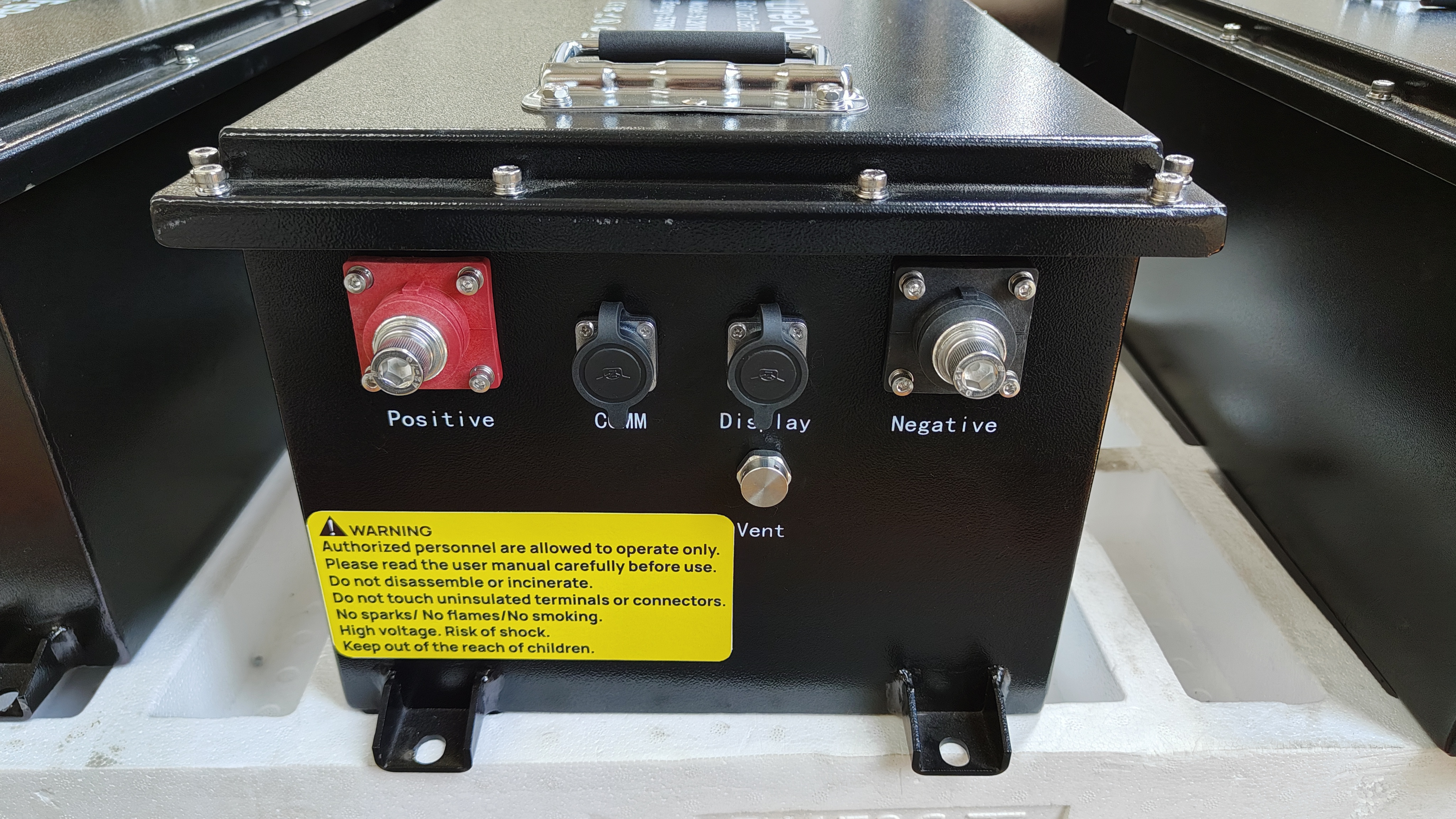
Replacing your power source represents a major vehicle investment. Make the wrong choice, and you risk sluggish performance or severely damaged electrical components. Many buyers assume higher voltage always equals better performance. However, evaluating different systems requires careful thought. You must match battery output to your specific terrain, daily payload, and existing motor limits. Throwing extra power at an old controller will not magically fix underlying mechanical issues.
Understanding these electrical differences saves you money and prevents catastrophic hardware failures. Golf Cart Batteries dictate how your vehicle handles steep hills and heavy passengers. This guide breaks down core performance metrics and real-world conversion challenges. We provide clear use-case frameworks to help you choose the exact electrical system your vehicle demands.
Key Takeaways
Voltage Equals Torque, Not Just Speed: 48V systems draw fewer amps to produce the same power as 36V systems, resulting in better hill-climbing ability and less component heat.
Upgrading Requires Hardware Changes: You cannot simply drop 48V golf cart batteries into a stock 36V cart; a conversion requires a new controller, solenoid, and charger.
Lithium Changes the Math: Upgrading to 36V lithium golf cart batteries often provides a better performance boost (via 300+ lbs of weight reduction) than converting a heavy lead-acid cart to 48V.
Terrain Dictates Investment: 36V is highly efficient for flat, standard golf course use, while 48V is mandatory for lifted carts, 4-passenger loads, and steep inclines.
1. Framing the Basics: How Voltage Impacts Cart Performance
Understanding voltage requires looking past top-speed numbers. We can use a basic plumbing analogy to clarify how power moves through your vehicle. Think of voltage as water pressure inside a pipe. Amperage represents the physical size of that pipe. Higher voltage pushes electrical power through the system much more efficiently. It requires less effort to deliver the exact same amount of work.
This brings us to a fundamental efficiency rule in vehicle electronics. To achieve the same wattage, a 48-volt system draws roughly 25% fewer amps than a 36-volt system. Lower amp draw creates a massive advantage for your hardware. Fewer amps mean less heat generation. Less heat reduces strain on delicate wiring and sensitive electronics. Ultimately, this promotes longer component life when driving under heavy loads.
You must strictly observe hardware compatibility limits. Cart electronics remain rigidly rated for specific voltages. Controllers, motors, and solenoids cannot guess what voltage you connected. Supplying incorrect voltage guarantees a bad outcome. The vehicle will either fail to run completely, or you will cause catastrophic electrical fires. Never upgrade battery voltage without confirming your hardware ratings first.
Best Practices for Checking Compatibility
Inspect the original motor label for a specific voltage rating.
Check your controller manual to see if it supports variable voltages.
Never assume a controller can handle a 12-volt jump without reprogramming.
2. 36V Golf Cart Batteries: Best for Flat Terrain and Standard Cruising
Standard 36-volt systems remain incredibly popular for good reason. They deliver steady, reliable power designed specifically for light-duty travel. A stock cart moving two passengers over paved surfaces operates perfectly on this voltage. It provides a balanced, predictable ride without stressing the motor.
These systems shine in predictable, manicured environments. We highly recommend them for traditional 18-hole golf on flat courses. They also excel at smooth neighborhood cruising and light yard work. If you stick to factory payload limits, 36v golf cart batteries will serve you exceptionally well for years.
Pros of a 36-Volt System
They feature a significantly lower upfront replacement cost.
They offer perfect compatibility with legacy models like older EZGO TXT carts.
They prove highly reliable when operating within factory weight guidelines.
Cons and Limitations
You will experience noticeable power lag on steep hills.
Adding heavy rear seat kits causes major speed reductions.
Installing large lift kits strains the entire electrical system heavily.
Common mistakes often occur when owners modify 36-volt carts. Adding heavy off-road tires drastically increases rotational mass. The 36-volt controller must pull excessive amps to turn those tires. This rapidly overheats the system and destroys battery life.
3. 48V Golf Cart Batteries: The Standard for Power, Hills, and Street Use
The industry eventually shifted toward higher voltage systems. Today, 48-volt platforms serve as the modern industry standard. You will find them in most newer Club Car, Yamaha, and EZGO RXV models. Engineers designed these systems for higher torque and sustained power delivery. They handle modern consumer demands far better than older legacy systems.
Higher voltage unlocks aggressive use cases. Hilly terrain practically mandates a 48-volt setup. Off-road applications, 4-to-6 passenger carts, and street-legal Low-Speed Vehicles (LSVs) require this extra torque. 48v golf cart batteries ensure your vehicle pushes through challenging conditions seamlessly.
Pros of a 48-Volt System
It maintains consistent speed up steep inclines without bogging down.
Higher energy efficiency yields longer range per charge under heavy payloads.
It comfortably supports upgraded high-amp controllers for maximum speed tuning.
Cons and Limitations
It commands a noticeably higher initial purchase price.
It acts as complete overkill for light, flat-terrain daily usage.
4. The Lithium Factor: How Chemistry Disrupts the Voltage Debate
Advanced battery chemistry completely rewrites the rules of vehicle performance. Lithium golf cart batteries introduce benefits previously impossible to achieve using older technology. The most dramatic advantage comes from massive weight reduction.
Traditional lead-acid battery banks routinely weigh over 300 pounds. A modern lithium setup weighs approximately 45 pounds. Swapping to lithium instantly removes the equivalent of a heavy adult passenger from your cart. This massive weight reduction instantly improves torque, acceleration, and braking distance. Often, this immediate performance boost negates the need to upgrade a 36-volt cart to 48 volts.
Lithium also changes how power feels during a drive. Lead-acid batteries suffer from severe voltage sag. As they drain, your top speed steadily drops. Your cart feels sluggish and unresponsive at 30% charge. Conversely, lithium chemistry features a remarkably flat discharge curve. It maintains 100% voltage output until entirely depleted. A 36-volt lithium cart drives just as fast at 10% charge as it does at 100%.
Smart internal electronics protect these modern power sources. A built-in Battery Management System (BMS) constantly monitors temperature and cell balance. The BMS prevents overcharging, deep discharge damage, and dangerous thermal events. This ensures safe, consistent operation regardless of your chosen system voltage.
5. The Real Cost of Upgrading: Can You Convert a 36V Cart to 48V?
Many owners dream of upgrading their slow 36-volt cart to a 48-volt powerhouse. The implementation realities tell a much harsher story. A voltage conversion is never just a simple battery swap. You must replace almost every major electrical component to prevent catastrophic failures.
Pushing 48 volts through a 36-volt system destroys hardware instantly. The older components cannot handle the increased electrical pressure. We frequently see owners melt their wiring harnesses because they skipped crucial upgrade steps.
Required Conversion Components
Motor Controller: You need a dedicated 48-volt or heavy-duty universal controller.
Upgraded Solenoid: A 48-volt continuous-duty solenoid is mandatory.
Heavy-Gauge Wiring: You must replace all power cables with 2 AWG or 4 AWG wire.
Battery Charger: Old 36-volt chargers will not recognize or charge a 48-volt bank.
F&R Switch: Older Forward/Reverse switches often require heavy-duty replacements.
We must look at the practical ROI verdict. Converting a working 36-volt cart to 48 volts rarely makes sense. Parts alone often exceed one thousand dollars. Unless your existing motor and controller are already dead, avoid this path. Upgrading to a modern 36-volt lithium system is usually the smarter performance hack. It delivers better acceleration through weight loss without requiring complex wiring replacements.
6. Decision Matrix: Shortlisting Your Next Purchase
Choosing the correct electrical setup depends heavily on your specific environment. We created a practical matrix to guide your buying decision. Evaluate your terrain, budget, and existing vehicle condition carefully.
Review the application scenarios below to match your exact needs:
Scenario
Recommended Action
Why It Works
Strict budget, flat pavement, working cart
Stick with 36V Lead-Acid
Provides the lowest upfront cost for basic cruising needs.
Want more speed/range without rewiring
Upgrade to 36V Lithium
Sheds 250+ lbs for instant hill-climbing power and torque.
Cart is already factory-wired for 48V
Stick with 48V (Lead-Acid or Lithium)
Maximizes factory hardware potential; switch to lithium for zero maintenance.
Hilly area, 4+ adults, currently own 36V
Buy a completely new 48V Cart
Converting old 36V carts is too expensive. Buying a factory 48V cart is safer.
Conclusion
Navigating the electrical landscape of your vehicle does not need to be intimidating. Do not buy power sources based purely on flashy top-speed claims. Instead, base your final decision on your cart's current electrical limits, your daily terrain, and your typical payload. High voltage provides incredible torque, but lightweight lithium often solves performance issues without requiring full rewiring.
Take actionable steps before spending any money. First, verify your cart's current voltage. You can count the battery caps if using lead-acid. 36-volt systems feature 18 total cells, while 48-volt systems feature 24 total cells. Next, physically measure your battery tray dimensions to ensure a proper fit. Finally, consult your motor controller’s spec sheet. Confirming these details guarantees you purchase the perfect power solution for your lifestyle.
FAQ
Q: Can I use a 48V charger on 36V golf cart batteries?
A: Absolutely not. Connecting a 48V charger to a 36V system forces dangerous amounts of electrical pressure into the cells. This immediately causes severe overcharging, boiling acid, and irreversible internal battery damage. It also creates a severe fire hazard. Always match your charger voltage precisely to your battery bank voltage.
Q: Will upgrading to 48V make my golf cart faster?
A: Speed is directly tied to the motor controller and motor RPM, not just voltage. Upgrading to 48V will not magically increase your top speed if your controller limits RPMs. However, 48V maintains your top speed much better under heavy loads and when climbing steep inclines.
Q: Can I mix 8V and 6V batteries to get 48V?
A: No, you should never mix different battery voltages or capacities. Doing so creates mismatched internal resistance. The charger will overcharge the smaller batteries and undercharge the larger ones. This destroys the entire bank quickly. You must use uniform battery banks or a single optimized lithium array.
Q: Are lithium golf cart batteries safe for older 36V carts?
A: Yes, they are incredibly safe for older models. You just need to ensure the continuous discharge rating of the new lithium battery meets or exceeds the amp draw of your cart's motor controller. The built-in Battery Management System (BMS) actively protects the older hardware from dangerous power surges.