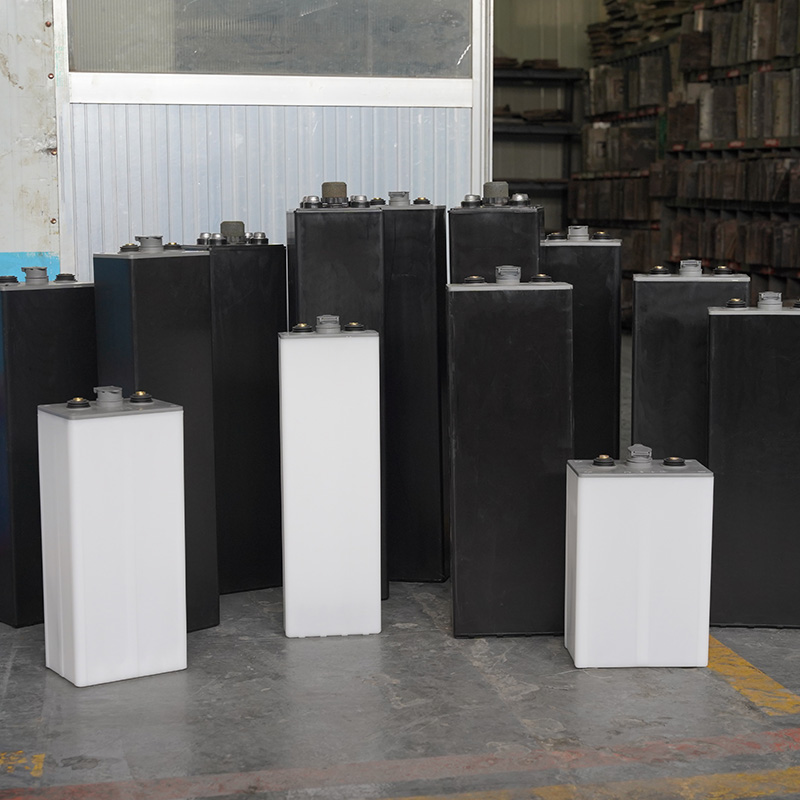
Industrial power dictates the pulse of modern warehouse efficiency. Forklift batteries represent far more than simple energy sources for your material handling equipment. They act as critical operational assets. These power units directly dictate facility uptime, labor allocation, and overall fleet efficiency. Choosing the wrong battery chemistry drains budgets through hidden maintenance demands. It severely impacts multi-shift productivity. Poor choices often force costly, unexpected infrastructure upgrades upon facility managers. You need a reliable, customized power strategy to secure long-term profitability. We will explore the internal mechanics of modern forklift power systems below. You will discover the fundamental differences between leading battery chemistries on the market today. Understanding these distinct internal operations serves as the vital first step. This knowledge allows you to make an evidence-based procurement decision for your fleet.
Key Takeaways
Industrial electric forklifts rely on deep-cycle traction batteries designed for prolonged, steady energy discharge rather than quick bursts of power.
The primary decision for fleet managers is weighing the lower upfront cost of traditional Lead-Acid (PzS forklift battery / PzB forklift battery) against the operational efficiency and zero-maintenance profile of a LiFePO4 forklift battery.
True cost evaluation must move beyond the purchase price to include maintenance labor, facility charging infrastructure, and downtime (TCO modeling).
The Core Mechanics: How Forklift Traction Batteries Work
Most people understand automotive starter batteries. These standard car batteries deliver a massive, quick jolt of power. They start an engine and then immediately recharge via an alternator. Forklift power systems operate entirely differently. Industrial equipment requires a deep-cycle traction battery to function properly. This specialized battery provides prolonged, continuous power over a long shift. You can discharge these heavy-duty units up to 80% of their total capacity. They handle this deep discharge without sustaining immediate internal damage.
Every industrial battery relies on a fundamental energy conversion principle. The internal components convert stored chemical energy into usable electrical energy. This continuous electro-chemical reaction provides a sustained, reliable voltage. The steady voltage directly powers heavy hydraulic lift motors and primary drive trains.
Forklift batteries also perform a critical mechanical function. They act as a mandatory counterbalance for the entire truck. Forklifts lift massive loads high into the air. They rely on the immense weight of the battery to prevent tipping over. Traditional lead-acid batteries naturally provide this heavy ballast. Modern lithium batteries weigh significantly less than their lead-acid counterparts. If you transition to lighter chemistries, you must add engineered steel ballast into the battery case. This ensures you maintain strict equipment safety and manufacturer compliance.
Common Mistakes to Avoid:
Operating a forklift without verifying the battery meets the manufacturer's minimum weight requirement.
Discharging any battery beyond 80% capacity, which drastically shortens its lifespan.
Ignoring the truck's lifting capacity adjustments when retrofitting a lighter power source.
Navigating Chemistry: Primary Types of Forklift Batteries
Traditional Lead-Acid (PzS and PzB)
Lead-acid remains the most widespread power source in older material handling fleets. You will encounter two primary structural standards in the European and Asian markets. A PzS forklift battery follows the DIN (Deutsches Institut für Normung) standard. It features robust tubular plates designed for high capacity. Conversely, a PzB forklift battery follows the BS (British Standard) dimensions. It utilizes a slightly different cell width and configuration.
The primary advantage of lead-acid chemistry is a lower capital expenditure (CapEx). They cost much less to purchase upfront. However, they demand a strict 8-8-8 operational cycle. You use the battery for 8 hours. You charge it for 8 hours. You must then let it cool down for 8 hours. This strict cycle limits multi-shift flexibility.
Lead-acid technology presents distinct operational risks. They require highly intensive maintenance. Your staff must routinely perform battery watering to replenish electrolyte levels. You also need to run equalization charges to balance cell voltages. Furthermore, lead-acid batteries suffer a noticeable efficiency drop-off. The voltage naturally decreases as the battery discharges. Operators often report sluggish truck performance during the final hours of a shift.
Lithium Iron Phosphate (LiFePO4)
Modern warehouses are rapidly transitioning to lithium technology. The LiFePO4 forklift battery serves as the current commercial standard. It dominates material handling applications due to its exceptional thermal stability. This chemistry resists overheating and eliminates the fire risks associated with older lithium-ion variants.
LiFePO4 batteries deliver outstanding operational outcomes. They provide a flat, sustained voltage curve. Your forklift receives full power from the first minute of the shift to the last. Operators experience zero sluggishness. These units require absolutely zero routine watering. A well-maintained lithium unit offers an impressive lifespan of up to 3,000 or more charge cycles.
Implementing lithium does require specific considerations. Every LiFePO4 unit requires an integrated Battery Management System (BMS). The BMS acts as the brain of the battery. It continuously monitors individual cell health. It regulates temperatures and prevents dangerous overcharging events. You must ensure your truck's digital display can communicate properly with the BMS.
Evaluating the Real Price of Power
Evaluating your power strategy requires looking far beyond the initial invoice. You must employ a transparent, assumption-based framework comparing long-term expenses. Fleet managers often focus entirely on the purchase price. This approach hides the true financial impact of daily operations.
Lead-acid systems boast a low initial CapEx. However, their operational expenditures (OpEx) remain remarkably high over a five-year period. Lithium systems demand a much higher initial CapEx. Yet, their OpEx stays incredibly low. The financial disparity stems primarily from hidden maintenance labor.
Quantify the labor hours your team spends on lead-acid upkeep. Workers spend countless hours on routine battery watering. They waste time cleaning up hazardous acid spills. They lose productive hours inside battery swapping rooms using heavy hoists. These hidden labor costs destroy warehouse profitability.
Energy efficiency also drives major cost differences. Lithium batteries charge much faster and waste very little electricity as ambient heat. Lead-acid batteries convert up to 20% of grid electricity into useless heat during charging. Furthermore, lithium eliminates the downtime caused by mid-shift battery changes. Your operators remain on the floor moving product.
Cost Comparison Framework: Lead-Acid vs. Lithium
Evaluation Metric
Traditional Lead-Acid
Lithium Iron Phosphate (LiFePO4)
Initial Purchase Price
Low
High (Often 2x to 3x higher)
Routine Maintenance Labor
High (Watering, equalizing, cleaning)
Zero
Energy Charging Efficiency
Lower (~80% efficient)
High (~98% efficient)
Mid-Shift Downtime
High (Requires physical battery swaps)
None (Charges during breaks)
Average Cycle Life
~1,500 cycles
3,000+ cycles
Charging Infrastructure, Scalability, and Facility Compliance
Your choice of chemistry heavily dictates your facility's physical layout. It also impacts strict safety compliance requirements. Traditional lead-acid fleets rely on physical battery swapping. A single truck running multiple shifts requires two or three separate batteries.
This swapping model demands dedicated, heavily ventilated battery rooms. Lead-acid batteries release explosive hydrogen gas during charging. OSHA compliance mandates specialized ventilation systems to extract this gas. You must also install emergency eyewash stations. Facility managers must install expensive overhead hoists or specialized extractors to physically lift the massive batteries out of the trucks.
Lithium chemistry completely changes this infrastructure paradigm. It enables a practice called opportunity charging. Operators plug the forklift directly into a charger during short breaks or lunch periods. You do not need to remove the battery from the truck. You can place charging stations directly on the facility floor. This eliminates the need for dedicated battery rooms. You instantly free up valuable warehouse real estate for revenue-generating inventory.
However, you must carefully evaluate your grid and electrical requirements. Switching to fast-charging lithium fleets introduces new challenges. Fast chargers pull massive amounts of electrical current. Your current facility might lack the necessary electrical capacity. Implementing this technology may require significant electrical upgrades to handle peak power draws safely.
Decision Framework: Shortlisting the Right Battery for Your Fleet
Choosing the ideal power source depends entirely on your specific workflow. No single chemistry fits every warehouse environment perfectly. You must evaluate your operational intensity to make the right choice.
Consider your shift structures carefully. Single-shift operations with ample daily downtime may not need lithium. If your trucks sit idle overnight, lead-acid systems have plenty of time to cool and charge. You might find optimal returns sticking with traditional lead-acid systems in low-intensity environments.
Multi-shift facilities operate under completely different rules. A 24/7 warehouse cannot afford mid-shift battery swaps. High-intensity operations generally achieve rapid financial returns with lithium power. Opportunity charging allows one battery to power a truck continuously across three shifts. This completely eliminates expensive spare battery inventory.
Environmental factors also play a massive role. Evaluate your extreme facility conditions. Cold storage and freezer environments severely degrade traditional battery performance. Lead-acid batteries can lose up to 30% of their total capacity in freezing temperatures. Lithium chemistry significantly outperforms traditional batteries in cold storage. They maintain their capacity and charge acceptance even in sub-zero environments.
Next-Step Actions for Fleet Managers:
Conduct a localized fleet power audit: Analyze exactly how many amp-hours your trucks consume during peak shifts.
Evaluate shift intervals: Document when and how long your operators actually take breaks to determine opportunity charging viability.
Assess electrical infrastructure: Hire a certified electrician to test your facility's peak load capacity.
Engage trusted vendors: Present your audit data to specialists to receive accurate, customized quotes.
Conclusion
Transitioning to a modern power strategy requires a rigorous, evidence-based look at your specific facility workflows.
Traditional lead-acid batteries remain viable for low-intensity, single-shift operations with ample charging time.
Lithium technology delivers unmatched efficiency, zero maintenance, and rapid returns for 24/7 multi-shift operations.
Opportunity charging reclaims valuable warehouse floor space by eliminating hazardous, heavily ventilated battery rooms.
Your facility's electrical grid capacity remains a critical limiting factor when upgrading to fast-charging technologies.
Do not rely on guesswork when upgrading your fleet's power source. We highly encourage you to request a custom financial analysis or a comprehensive fleet energy audit. Reach out to a qualified material handling specialist today. They will evaluate your daily amp-hour usage and validate your infrastructure assumptions before you invest.
FAQ
Q: What is the difference between a PzS and PzB forklift battery?
A: The difference lies in their regional manufacturing standards and physical dimensions. A PzS battery follows the DIN (German) standard, featuring specific cell widths and tubular plate designs. A PzB battery follows the BS (British) standard. While both deliver reliable lead-acid power, they fit into different battery compartment sizes. Always check your forklift's manual to ensure proper physical fitment.
Q: How long do forklift batteries last?
A: Lifespan depends entirely on chemistry and maintenance. A well-maintained traditional lead-acid battery typically lasts around 1,500 charge cycles, which equates to roughly five years in a single-shift operation. Advanced LiFePO4 batteries routinely exceed 3,000 charge cycles. With proper opportunity charging, lithium units often outlast the physical chassis of the forklift itself.
Q: Can I put a lithium battery in a forklift designed for lead-acid?
A: Yes, but you cannot simply drop it in. You must perform a proper retrofit. Lithium batteries weigh much less than lead-acid ones. You must add engineered steel ballast to the battery compartment to maintain the forklift's required counterbalance weight. Additionally, the truck's digital display may need integration with the new Battery Management System.
Q: What is a traction battery?
A: It is a specialized, deep-cycle industrial battery. Unlike a car battery designed for quick bursts of starting power, it provides continuous, steady propulsion and lifting power. It can be safely discharged down to 20% of its total capacity repeatedly without sustaining internal damage. They power forklifts, golf carts, and floor scrubbers.