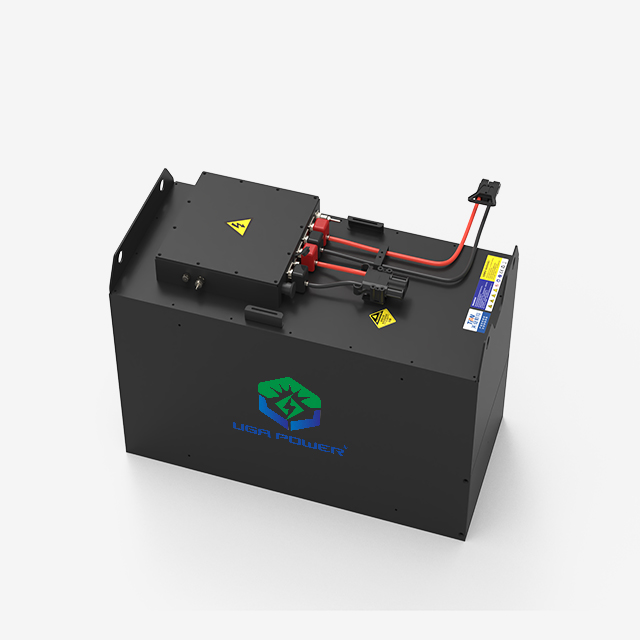
Equipment downtime directly erodes your warehouse profit margins. Hidden maintenance costs silently drain your operational budget. Upgrading your power source is no longer a simple one-to-one swap. The market shift in available chemistries changes everything. Modern charging protocols require you to align operational cadence precisely. You need the right power source for your specific fleet.
This guide breaks down how you evaluate an electric forklift battery solution. We explore critical shift demands and infrastructure limitations. You will learn how to match battery chemistry to continuous run-time needs. We also cover spatial constraints and extreme environmental factors. Proper sizing requires you to understand specific truck standards. We guide you through dimensional fits, ballast needs, and safety protocols. By the end, you will know exactly how to select the most efficient battery system. You can maximize your facility output and protect your bottom line.
Key Takeaways
Matching battery chemistry to shift structures (single vs. multi-shift) is the primary driver of ROI.
Traditional traction batteries require dedicated charging rooms and maintenance labor, whereas lithium-ion solutions allow for decentralized opportunity charging.
Upfront cost is a flawed evaluation metric; cycle life, energy efficiency, and maintenance requirements determine actual facility profitability.
Proper sizing requires understanding specific truck standards, including weight counterbalances and dimensional fits (e.g., DIN vs. BS standards).
Assessing Your Facility’s Operational Profile
You must understand your daily operational profile before selecting new forklift batteries. A warehouse running one shift has vastly different needs than a 24/7 distribution center. We recommend defining your continuous run-time requirements first. Single-shift operations often tolerate longer charging periods. High-throughput facilities demand maximum equipment availability.
Shift Intensity and Equipment Utilization
You need to calculate acceptable charging windows. Long-duration overnight charging works perfectly for lighter operations. Conversely, short intervals during shift breaks require advanced charging capabilities. Multi-shift operations typically drain standard batteries mid-shift. Operators then waste valuable time swapping depleted units for fresh ones. You must document these utilization metrics accurately. They dictate whether you need specialized fast-charging systems.
Facility Constraints and Infrastructure
Your building infrastructure plays a massive role in battery selection. Evaluate your existing electrical grid capacity immediately. Fast-charging protocols require significantly higher peak electrical draws. Older buildings often lack this baseline grid capacity. Upgrading the electrical panels introduces massive unexpected expenses.
Assess your spatial availability next. Traditional battery systems demand dedicated charging rooms. These rooms require acid-spill containment and specialized ventilation. Localized charging stations free up valuable floor space. You can repurpose this space for revenue-generating inventory storage.
Temperature and Environmental Factors
Environmental conditions severely impact battery degradation. Cold storage facilities present unique power challenges. Freezing temperatures reduce battery capacity dramatically. Extreme heat creates similar degradation issues. High temperatures accelerate internal component wear. You must identify these specific environmental requirements early. Choose a chemistry engineered to withstand your exact temperature profile. Proper selection ensures continuous output and prevents premature cell death.
The market primarily offers two dominant chemistries. Each presents distinct advantages and operational trade-offs. You must weigh these carefully against your facility profile.
Traditional Lead-Acid Solutions
Many facilities still rely on the classic traction battery. These lead-acid systems provide reliable power at a lower initial price point. They dominate standard single-shift applications globally.
PzS and PzB Standardizations
You will encounter two main dimensional standards in the lead-acid market. The PzS forklift battery conforms to the German DIN standard. It features a robust tubular plate design. This design suits heavy-duty applications perfectly. It remains the best option for standard European-model equipment. However, it requires strict weekly watering schedules.
The PzB forklift battery follows the British Standard (BS). It features a slightly different dimensional footprint. British Standard trucks explicitly require this form factor. It offers excellent baseline power. Unfortunately, it carries the exact same maintenance overhead as the PzS format.
Implementation Reality: Lead-acid models offer lower upfront capital requirements. However, they demand an 8-hour charge followed by an 8-hour cool-down cycle. Multi-shift operations must purchase two or three units per truck. Operators must physically swap these heavy units daily.
Advanced Lithium Technology
Modern warehouses increasingly adopt lithium technology. This chemistry fundamentally changes fleet management. It eliminates almost all daily maintenance tasks.
LiFePO4 Integration
The LiFePO4 forklift battery represents the gold standard in lithium solutions. Lithium Iron Phosphate provides unmatched thermal stability. It offers the highest safety rating among all lithium chemistries. The risk of thermal runaway remains virtually zero.
Implementation Reality: These units require absolutely zero daily maintenance. They produce zero hazardous off-gassing. They allow for aggressive opportunity charging. Operators simply plug the truck in during coffee breaks. The equipment stays active across three full shifts.
The Trade-off: You will face a higher initial procurement cost. Furthermore, lithium cells weigh significantly less than lead-acid cells. Forklifts rely on battery weight for lifting counterbalance. You may need to add physical deadweight to the battery box. This ensures safe lifting operations.
Lifecycle Performance and ROI Modeling
You must look beyond the initial purchase price. Evaluating lifecycle performance dictates your long-term facility profitability. Different chemistries yield vastly different energy returns over time. We urge you to analyze cycle life and energy efficiency rigorously.
Cycle Life and Degradation Curves
A battery "cycle" occurs every time you discharge and recharge it. Traditional lead-acid batteries deliver approximately 1,500 cycles. You only achieve this lifespan if you maintain them perfectly. Missed watering schedules degrade this number quickly. By year three, capacity drops noticeably.
Lithium Iron Phosphate alters this timeline entirely. A standard lithium unit delivers over 3,000 cycles. Many models exceed 5,000 cycles under proper management. They maintain a flat discharge curve. The forklift operates at full speed even at a 10% charge state. Lead-acid units cause equipment sluggishness as they deplete.
Energy Efficiency Metrics
Energy loss represents a massive hidden expense. Lead-acid charging generates substantial heat. You lose roughly 20% to 30% of your electrical pull as wasted heat energy. You pay the utility company for energy you never actually use.
Lithium systems boast exceptional energy conversion. They feature a charge acceptance rate greater than 95%. Almost every kilowatt you pull from the grid transfers directly into usable truck power. Over a five-year period, this efficiency saves thousands of dollars per truck.
Comparison of Battery Lifecycle and Efficiency Metrics
Metric
Lead-Acid (Traction)
Lithium (LiFePO4)
Average Cycle Life
~1,500 cycles
3,000+ cycles
Energy Efficiency
70% - 80%
> 95%
Performance Curve
Sluggish at low charge
Consistent until empty
Opportunity Charging
Damages the battery
Highly recommended
Infrastructure Readiness and Compliance Considerations
Integrating a new power system requires careful infrastructure planning. You must ensure regulatory compliance. Safety protocols vary wildly between different chemistries. Evaluate your facility readiness before finalizing any purchase.
Safety and Ventilation Compliance
Local compliance agencies enforce strict rules. OSHA mandates rigid protocols for lead-acid systems. These units release hydrogen gas during their charging cycles. You must install industrial ventilation to mitigate this explosive off-gassing. Acid-spill containment infrastructure is mandatory. You must also install accessible eye-wash stations nearby.
Lithium systems eliminate off-gassing risks entirely. They do not leak acid. You avoid installing expensive ventilation hoods. However, they require a sophisticated Battery Management System (BMS). The BMS monitors internal cell voltage constantly. It prevents localized thermal events. You must ensure this electronic safeguard functions flawlessly.
Charger Compatibility
You cannot always mix old chargers and new batteries. Assess your existing charger hardware immediately. You might own high-frequency chargers already. Technicians can sometimes reprogram these units for new chemistries. Often, transitioning to lithium requires a complete charger hardware overhaul. Fast opportunity charging demands specialized high-output chargers. Plan your electrical budget accordingly.
Telematics and Fleet Management
Modern fleets rely heavily on data analytics. Telematics separate average operations from elite facilities. Evaluate the BMS capabilities of any prospective battery. Look for solutions providing transparent data. You need real-time visibility into the state of charge (SOC). The system should push automatic temperature alerts to your maintenance team. Usage analytics help you balance workloads across your entire fleet.
How to Shortlist Your Electric Forklift Battery Solution
Selecting the ideal power source requires a systematic approach. Follow these four steps to eliminate guesswork. We designed this framework to protect your operational efficiency.
Step 1: Audit Current Baseline. Document your current fleet spend accurately. Track your monthly maintenance labor hours. Calculate lost productivity caused by mid-shift battery swaps. You need this baseline data to measure future improvements.
Step 2: Match Chemistry to Throughput. Rule out lead-acid immediately if you run three shifts on a single truck. You cannot afford the cool-down periods. Rule it out if you lack floor space for a dedicated charging room. Choose lithium for high-intensity, multi-shift environments.
Step 3: Verify OEM Compatibility. Ensure the chosen unit matches your specific forklift fleet. Check the voltage requirements carefully. Verify the dimensional requirements (DIN vs. BS). Confirm you have the correct counterbalance weight installed. Underweight batteries cause dangerous forklift tipping.
Step 4: Pilot and Validate. Never roll out a fleet-wide upgrade blindly. Run a single-unit pilot first. Verify the BMS data accuracy in real-time. Test the opportunity charging viability during actual operator breaks. Ensure your staff adopts the new protocols before expanding the rollout.
Common mistakes occur during Step 3. Facility managers often order the wrong dimensional standard. Always double-check your truck manual before finalizing the procurement order.
Conclusion
Selecting the optimal power source requires careful calculation. You must balance facility infrastructure constraints against operational intensity. You must evaluate lifecycle performance over raw sticker prices. A cheap initial purchase often results in massive long-term labor costs.
Do not purchase based on sticker price alone. Demand a comprehensive power study from your vendor. They should analyze your shift patterns thoroughly. They must evaluate your electrical grid capacity before recommending a specific chemistry.
Take action today to optimize your fleet. Contact your engineering or sales team for a custom fleet power audit. Request detailed specification sheets for various chemistries. You can transform your warehouse efficiency by choosing the right power infrastructure.
FAQ
Q: Can I replace my lead-acid forklift battery with a LiFePO4 battery?
A: Yes, but it requires ensuring the forklift’s weight requirements are met. Lithium is much lighter and may require a heavy metal ballast. You must also confirm the truck's electrical systems are perfectly compatible with the new Battery Management System (BMS).
Q: What is the difference between PzS and PzB forklift batteries?
A: Both are tubular lead-acid traction batteries. PzS conforms to DIN (German) dimensions. PzB conforms to BS (British) dimensions. The choice depends entirely on your specific forklift's battery compartment specifications. They perform identically in terms of power output.
Q: How long should an electric forklift battery last?
A: A standard lead-acid battery typically lasts 3 to 5 years (approximately 1,500 cycles) with strict watering maintenance. A LiFePO4 battery can easily last 7 to 10 years (3,000+ cycles). Lifespan ultimately depends on your facility usage and charging habits.
Q: What is opportunity charging and which batteries support it?
A: Opportunity charging involves plugging in the battery during short breaks (15-30 minutes). You do not wait for a full depletion. Lithium-ion (LiFePO4) batteries are built specifically for this practice. Traditional lead-acid batteries will degrade rapidly if opportunity charged.