![Types of Forklift Batteries You Should Know]()
Introduction
Most forklift downtime starts from a simple problem: the wrong power choice. If you pick the wrong type, charging gets harder and costs rise fast.
In this guide, we break down the main forklift batteries you should know, from lead-acid to lithium and fuel cells. You will learn where each type fits best, what it costs to run, and what questions help you buy with confidence.
The main types of forklift batteries
Lead-acid forklift batteries
Lead-acid forklift batteries are still common in many warehouses. They work well when you run one shift and can charge overnight. Many sites already own chargers and have trained staff. This reduces switching friction and keeps procurement simple. However, lead-acid needs routine care such as cleaning and water checks. It also needs a safe charging area and clear handling rules. Charging can be slow, and cooling time can reduce flexibility. Multi-shift fleets often add spare batteries and swap equipment. That adds labor, floor space, and traffic risk. Lead-acid can be a strong fit, but only when your workflow supports its routines.
Flooded lead-acid
Buyers sometimes compare different lead-acid types, but in forklift applications the mainstream choice is flooded lead-acid. It uses liquid electrolyte and needs periodic watering, and is the standard “industrial traction” battery in most fleets.
Other types such as GEL are now rarely used in forklifts and are uncommon in new projects. They do not offer clear advantages under typical industrial duty and are not widely supported.
In practice, flooded lead-acid fits most stable operations. The best choice still depends on your duty intensity and maintenance capability.
Lithium-ion forklift batteries
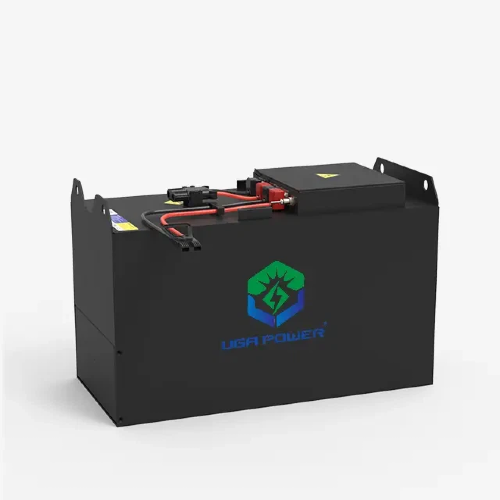
Lithium-ion forklift batteries are popular in high-use operations. Many fleets choose LiFePO4 systems for stable output and easier routines. They support fast charging and short top-up charging during breaks. They also remove watering tasks and often reduce battery swapping. A lithium pack includes a BMS that monitors voltage, current, and temperature. It helps prevent misuse and improves consistency across shifts. The main tradeoff is higher upfront cost and tighter charger matching needs. Your team also needs clear charging rules and basic connector care. For many multi-shift fleets, lithium improves uptime and reduces labor friction.

Hydrogen fuel cell power systems
Fuel cells are sometimes treated like batteries in forklift planning. Their core advantage is quick refueling and steady power delivery. That can work well in large sites running near 24/7. They can reduce long charging windows and reduce swap handling. Still, fuel cells require major infrastructure and strict safety programs. You need hydrogen storage, fueling equipment, and reliable supply. You also need service support and clear emergency procedures. Many sites cannot justify this unless fleet scale is large. For mid-size warehouses, lithium or lead-acid is usually simpler to run.
Nickel-cadmium batteries
Nickel-cadmium is rare in modern forklift procurement. You may see it in legacy fleets or niche environments. It can tolerate harsh use and deep discharge in some settings. However, it carries disposal complexity and tighter environmental controls. Supply options are narrower than lead-acid or lithium. For new projects, it is usually not the best value. If you inherit it, focus on service support and end-of-life handling plans. Most fleets eventually migrate to lead-acid or lithium to simplify sourcing and compliance.
Table 1: Quick comparison of forklift batteries
Type | Best for | Key strengths | Key tradeoffs |
Flooded lead-acid | One shift, budget fleets | Familiar, mature supply | Watering, long charge, swap labor |
Lithium-ion (LiFePO4) | Multi-shift, high uptime | Fast charge, low maintenance | Higher upfront cost, charger matching |
Hydrogen fuel cell | Large 24/7 hubs | Fast refuel, steady power | Infrastructure cost, supply planning |
Nickel-cadmium | Legacy niches | Tolerates harsh duty | Regulations, limited sourcing |
Note: Always confirm voltage, fit, and connector details before ordering.
Lead-acid vs lithium forklift batteries
Runtime consistency and power fade
Lead-acid batteries can fade as the shift progresses. Operators may feel slower lift response near low charge. This matters during peak picking windows and heavy lift cycles. Lithium often holds voltage steadier, so performance feels consistent. It also supports more flexible charging habits during the day. Still, real runtime depends on usable capacity rules and workload. Many lead-acid fleets avoid deep discharge to protect life. That reduces usable energy compared to the label. Lithium often delivers a larger usable window in practice. Compare delivered work per shift, not only rated capacity.
Charging downtime and scheduling flexibility
Lead-acid charging tends to create rigid schedules. Long charge cycles and cooling needs can limit flexibility. Multi-shift fleets often add spare packs and swap equipment. That adds floor space, labor time, and safety exposure. Lithium supports faster charging and break-time top-ups. This can reduce swapping and simplify the day. However, charging flexibility still depends on station access and electrical capacity. If chargers are crowded or far away, top-up plans fail. Map access and time windows before you decide capacity. In many sites, better access beats buying bigger packs.
Maintenance workload and labor impact
Lead-acid requires consistent care and clear safety controls. Teams manage watering, cleaning, corrosion, and swap handling. These tasks consume labor and raise injury risk. Lithium reduces many daily tasks because it avoids watering and often reduces swapping. The work shifts toward connector care, station order, and basic alert handling. Many buyers prefer this because it is quicker and cleaner. Still, lithium needs correct chargers and clear SOPs. Without discipline, any battery type can fail early. The key is choosing a routine your team can run every day.
Cost and ROI over time
Lead-acid often wins on purchase price. Lithium often wins on lifecycle value when usage is high. ROI depends on how costly downtime is for you. It also depends on labor cost and shift intensity. If you run one shift and have stable routines, lead-acid can be cost effective. If you run multiple shifts and value uptime, lithium often becomes attractive. A fair comparison includes chargers, electrical upgrades, labor time, and replacement timing. It also includes the cost of floor space for swap rooms and safety zones. When you model the whole system, the “best value” becomes clearer.
Tip: Build your ROI model using real downtime hours from last month.
How to choose the right type of forklift batteries
Work intensity and shift pattern
Start by mapping shifts and peak hours. One shift often fits lead-acid because overnight charging is easy. Two shifts often pushes you toward lithium or swapping systems. Three shifts usually demands high uptime and fast turnaround. In those cases, lithium or fuel cells may be considered. Also map workload intensity. Heavy loads and frequent lifts raise current draw and heat. Long travel routes raise energy needs. If your trucks hit high peak draw daily, stable output becomes more valuable. Choose based on the hardest days, not the easiest days.
Operating environment
Environment can change outcomes fast. Cold storage reduces capacity and can limit charging behavior. Hot warehouses increase aging risk and can raise fault frequency. Dust, humidity, and corrosive air can damage terminals and cables. Washdown areas require careful routing and protection. Ask vendors how each system handles heat, cold, and condensation. Confirm station ventilation and safe cable management. Many problems blamed on batteries are really layout problems. Fixing airflow and station order can extend life and reduce faults.
Battery size, weight, and truck requirements
Batteries affect balance, not just runtime. Some forklifts rely on battery weight for counterbalance. A lighter pack can change stability unless the design accounts for it. Always confirm compartment fit, mounting method, and connector type. Confirm cable lengths and service access. Also confirm any communication needs, such as CAN for status reporting. If you miss these details, projects stall and costs rise. A correct fit reduces risk and speeds commissioning.
Sustainability and end-of-life handling
End-of-life planning protects budgets and compliance. Lead-acid recycling is widely established in many regions. Lithium programs vary, so ask about take-back and partners. Fuel cell systems bring different handling needs due to infrastructure. Put return and recycling terms into the contract. Also consider longevity and efficiency. A longer-life system reduces waste and reduces replacement disruption. This matters for ESG reporting and for long-term cost control.
Table 2: Best-fit guide by operation scenario
Small fleet, light duty
Scenario | Common pain point | Battery type that often fits |
One shift, stable schedule | Planned charging | Flooded lead-acid |
Two shifts, limited swap space | Downtime and labor load | Lithium-ion (LiFePO4) |
Three shifts, large site | Turnaround time | Lithium or fuel cell |
Cold storage operations | Capacity loss | Lithium or engineered lead-acid |
Simple setup priority | Flooded lead-acid or lithium-ion |
|
Note: A short site walk often reveals hidden constraints fast.
Maintenance basics by forklift battery type
Lead-acid care essentials
Lead-acid care rewards consistency. Keep the top clean and dry to reduce tracking and corrosion. Check terminals for tightness and heat marks. Follow watering guidance and keep water quality controlled. Maintain ventilation in charging areas and enforce basic PPE rules. If your routine includes equalization charging, follow supplier guidance. Too much can add heat and water loss. Too little can allow imbalance across cells. Train operators to report low-power behavior early. Small issues become big failures when ignored.
Lithium-ion care essentials
Lithium care is simpler, but it still needs discipline. Use the correct charger profile and avoid makeshift wiring changes. Keep connectors clean and secure to prevent arcing. Review alerts and treat repeated faults as signals. Keep stations dry and clear of metal debris. If you have BMS data, review temperature and charging patterns weekly. It helps you spot risky behavior early. Clear SOPs reduce confusion across shifts and protect warranty outcomes.
Fuel cell care essentials
Fuel cell routines focus on refueling safety and station reliability. Train staff on correct refueling steps and emergency response. Inspect fueling stations and enforce access control. Track service intervals and confirm support for critical parts. Remember, the fueling station is part of uptime. If it fails, the fleet stops. Plan maintenance windows and consider redundancy when scale is large.
Table 3: Simple maintenance focus by battery type
Battery type | Daily focus | Weekly focus |
Flooded lead-acid | Safe charge setup | Clean, corrosion control, water checks |
Lithium-ion | Visual check, alert review | Connector care, station inspection, data review |
Fuel cell | Safe refuel steps | Station inspection, scheduled service checks |
Tip: One shared checklist reduces missed steps across shift changes.
When it’s worth upgrading forklift batteries
Signs your current battery type is holding you back
If problems repeat every week, it is a signal, not bad luck. Look for patterns in three areas: time, labor, and safety. Use your own data, not opinions, to judge the pressure.
· Time loss: Frequent charging stops, long cool-down waits, or daily battery swaps that cut productive hours.
· Labor drag: Extra handling steps, watering tasks, cleaning time, and repeated troubleshooting calls.
· Performance drops: Power fade late in shifts, slower lift response, and uneven runtime across trucks.
· Safety exposure: Acid spills, heavy swap risks, damaged cables, or crowded charging zones.
· Planning stress: Unplanned failures during peak weeks, plus urgent rentals or emergency repairs.
If two or more items show up often, you are likely paying hidden costs already.
A practical upgrade path from lead-acid to lithium
A good upgrade is a rollout, not a sudden switch. Keep it simple and control risk using a phased plan.
· Pick the pilot group: Choose one truck model and one shift team. Select the route that reflects normal work.
· Check the site basics: Confirm charger specs, electrical capacity, connector type, and charging space access.
· Set clear SOPs: Define plug-in times, safe cable handling, and “stop-use” rules for heat or damage.
· Train the team: Teach what changes, what stays the same, and who to call for alarms or faults.
· Measure results: Track uptime, charge time, operator feedback, and any fault events for several weeks.
· Scale in waves: Expand to the next truck group only after the pilot hits stable targets.
Also confirm weight and balance needs early. Some trucks need a tray design or ballast plan to maintain stability.
Vendor questions that reduce buying risk
Use a short question set to surface real support, not just sales claims. These questions help you avoid wrong sizing and slow service later.
· Warranty: Is it based on years, cycles, or both, and what usage limits apply?
· Charging: Can existing chargers stay, or must they change, and what profile is required?
· Fit and integration: What tray dimensions, weight, and connector standards are assumed?
· Service: What is the response time, and what spare parts are stocked locally?
· Performance promise: What runtime do they expect for your duty cycle, and what assumptions drive it?
· End-of-life: What return, recycling, and packaging steps are included in the deal?
Note: A low price means little without clear service response and written assumptions.
Conclusion
Forklift battery choice is not just about price. It shapes uptime, charging routines, maintenance work, and safety risk. When you compare lead-acid, lithium, and fuel cells, the best option is the one that fits your shifts and your site limits.
If your fleet wants faster charging and simpler daily care, lithium is often worth a closer look. SUZHOU FOBERRIA NEW ENERGY TECHNOLOGY CO,.LTD. supplies LiFePO4 forklift batteries built around smart BMS protection, stable output, and flexible customization, plus responsive after-sales support for B2B buyers.
FAQ
Q: What are the main types of forklift batteries?
A: Forklift batteries are usually lead-acid (mainly flooded), lithium-ion (often LiFePO4), or fuel cell systems, lithium-ion (often LiFePO4), or fuel cell power systems.
Q: Which forklift batteries are best for multi-shift work?
A: Forklift batteries for multi-shift fleets are often lithium-ion because they support faster charging and reduce swap downtime.
Q: How do lead-acid vs lithium forklift batteries compare?
A: Lead-acid vs lithium forklift batteries differ in charging time, daily maintenance, power consistency, and total lifecycle cost.
Q: How can I choose the right forklift batteries for my site?
A: Choose forklift batteries by shift pattern, workload, charging access, environment, and service support, not price alone.
Q: What should I ask a vendor before buying forklift batteries?
A: Ask about warranty terms, charger requirements, tray fit, response time, spare parts, and end-of-life recycling options.