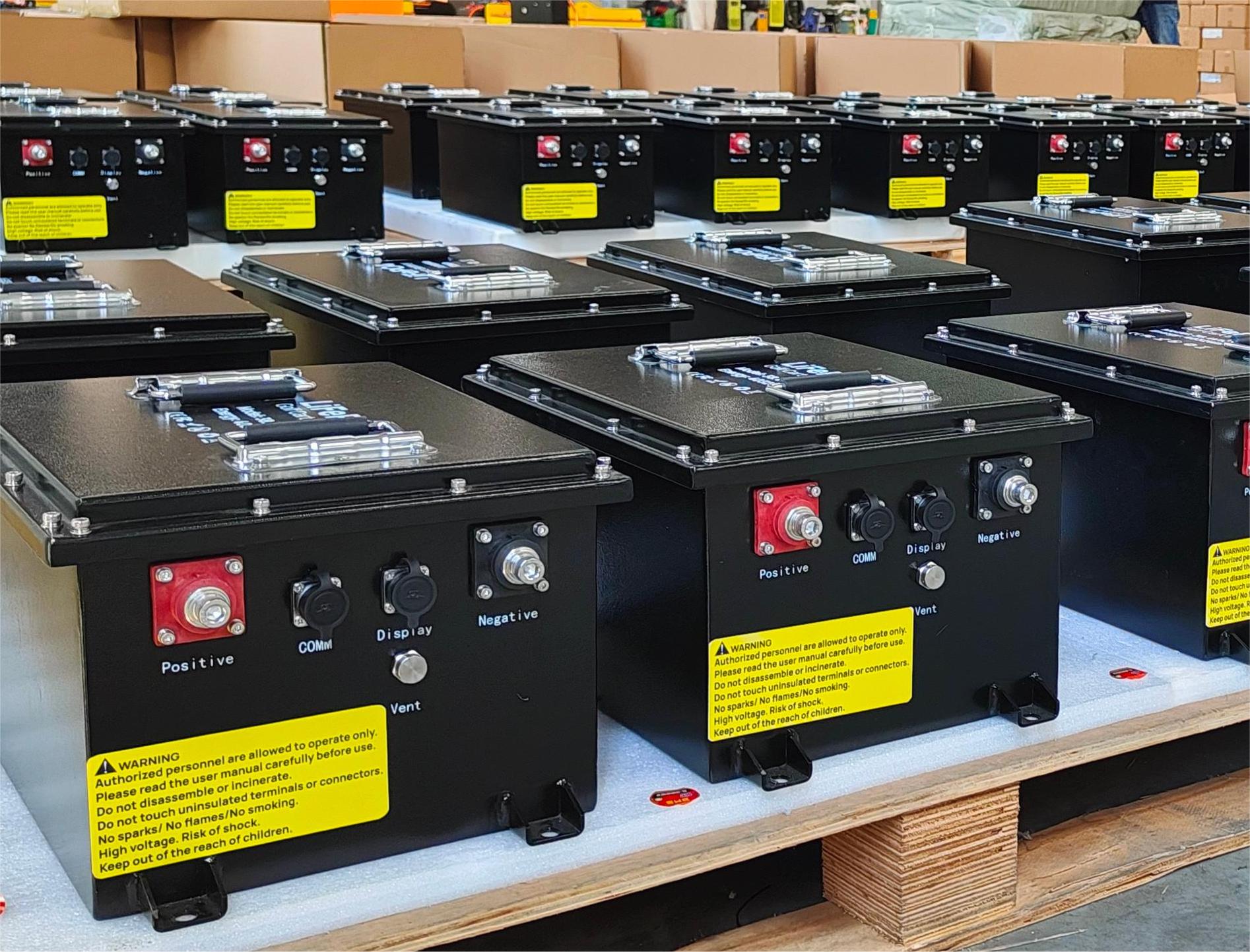
Golf cart batteries shape how a fleet performs every day. A cart may look simple from the outside, but its battery pack decides route range, hill-climbing ability, charging rhythm, maintenance workload and user confidence. For resorts, campuses, golf clubs, tourist parks, security patrol teams and property management fleets, the battery is not only a replacement part. It is the foundation of reliable operation.
This guide explains how fleet buyers can evaluate golf cart batteries in a practical way. It covers battery chemistry, capacity, charging habits, daily care, storage, safety checks and selection questions. It also translates many proven lithium traction battery care principles into a golf cart fleet context, because the same basic rules—correct charging, temperature control, clean connectors and avoiding deep discharge—also protect golf cart battery life.
FOBERRIA provides LiFePO4 battery solutions for golf carts and other electric vehicles. A product such as the 38.4V 105Ah LiFePO4 battery for golf carts gives fleet buyers a concrete example when comparing voltage, capacity, chemistry and vehicle fit.
Fleet buyers often focus on the vehicle body, seat layout, tires and appearance first. Those details matter, but the battery decides whether the cart can finish its route without interruption. A weak or poorly matched battery creates short range, slow acceleration, charger conflicts and repeated downtime. A suitable battery gives the fleet a predictable workday.
In commercial use, golf carts may run several times per day. A resort cart may carry guests and luggage. A campus cart may support patrol and maintenance routes. A golf course cart may cover slopes, wet grass and repeated stop-start driving. These working conditions require a battery that can deliver stable current and accept repeated charging without becoming difficult to manage.
LiFePO4 Compared With Lead-Acid for Golf Carts
Lead-acid batteries have been used in golf carts for decades. They are familiar, widely available and relatively easy to understand. However, they require more routine care and lose performance as voltage drops. Flooded lead-acid batteries also need water maintenance and careful ventilation. If they are not maintained correctly, the fleet can experience shorter runtime and more frequent battery issues.
LiFePO4 batteries are increasingly selected for golf carts because they are lighter, cleaner and more consistent in output. They charge more efficiently, require less routine maintenance and avoid acid handling. For fleet operators, the most important benefit is often not one single specification. It is the smoother operating routine: easier charging, less daily maintenance and more predictable range.
Factor
Lead-acid battery
LiFePO4 battery
Maintenance
May require watering, cleaning and more frequent checks
Low routine maintenance with BMS protection
Weight
Heavier pack can affect efficiency and handling
Lighter pack supports better vehicle efficiency
Charging
Longer charging and rest periods are common
More flexible charging when matched with the correct charger
Usable performance
Voltage may drop more noticeably during discharge
More stable output across much of the discharge cycle
Fleet planning
More manual care may be needed
Better suited for operators seeking cleaner daily management
How to Size Golf Cart Batteries for Real Operating Conditions
Battery selection should start with real routes, not only with a catalog capacity number. Buyers should check the cart voltage platform, motor power, controller limit, passenger load, road grade, average daily distance and charging window. A flat course with short routes has a different battery requirement from a resort property with hills, multiple passengers and frequent stops.
Capacity should be selected with a reasonable margin. If a fleet uses nearly all available energy every day, the battery will work harder and the charging routine becomes less forgiving. A pack with better reserve capacity can reduce deep discharge and help the fleet maintain consistent operation during busy days.
Charging Habits That Protect Battery Life
Charging discipline is one of the strongest influences on lithium battery life. The goal is not simply to fill the battery as fast as possible. The goal is to charge safely, avoid excessive heat, prevent deep discharge and keep the battery within a healthy operating range.
Before charging: check the environment, equipment and battery
A good charging routine begins before the charger is connected. The charging area should be ventilated, dry and away from open flame, heat sources, flammable materials and direct rain exposure. Smoking and hot work should not take place in the charging area. A commercial fleet should also keep appropriate fire safety equipment nearby according to local rules and site procedures.
Operators should inspect the charger plug, socket and cable. Any aging, damage, looseness or exposed wire should be handled before charging. The battery compartment should be clean and free from dust, debris and corrosion. If the battery case shows swelling, deformation, leakage, odor or abnormal heat, charging should stop immediately and the battery should be checked by qualified personnel.
For daily use, it is better to start charging before the battery becomes deeply discharged. A practical rule is to avoid running the pack to empty. Beginning charging when the remaining capacity is around 20% or higher helps protect the cells and reduces stress on the battery.
During charging: use the right charger and protect heat dissipation
Golf cart batteries should be charged with a charger matched to the battery voltage, chemistry and BMS requirements. Mixing chargers across different brands, voltages or chemistries can cause overvoltage, overcurrent, overheating or fault alarms. A lead-acid charger should not be used for a lithium battery unless the battery supplier confirms compatibility.
The correct connection sequence should follow the charger and vehicle instructions. During charging, operators should avoid pulling the connector, moving the battery, covering the charger or blocking heat dissipation. The charger and battery should remain uncovered so heat can escape. If the charger alarms, the battery becomes unusually hot, or an odor appears, power should be cut and the issue should be inspected.
Temperature also matters. Many lithium battery systems operate best in moderate conditions. A practical operating target during normal charging is to avoid excessive heat and prevent charging in extremely hot or extremely cold environments. If the site operates in harsh climates, buyers should discuss temperature protection and charger settings before confirming the battery system.
After charging: disconnect correctly and keep the system clean
When charging is complete, operators should disconnect the system according to the recommended sequence. A common safety practice is to cut charger power first and then remove the connector from the vehicle battery interface. This reduces the chance of sparking and helps protect connectors.
After charging, the connector area should be kept clean and dry. Dust, moisture and chemical residue can create poor contact and increase heat at the connection point. Chargers should be stored in a ventilated and dry area, with cables placed neatly to prevent crushing or bending damage.
Daily Maintenance for Golf Cart Battery Fleets
LiFePO4 batteries reduce daily maintenance, but they do not eliminate the need for inspection. A battery fleet should still have a simple routine. Operators can check whether the battery case is clean, whether cables are tight, whether the charger works normally and whether the cart shows abnormal alarms. These checks prevent small issues from turning into downtime.
Cleanliness is important because dust buildup can affect heat dissipation. Battery compartments should be cleaned with dry methods where appropriate. Wet cleaning near electrical interfaces should be handled carefully to avoid moisture inside connectors. If corrosion appears on a connector, the fleet should stop using the affected cart until the connection is inspected and restored safely.
Temperature and Storage Management
Battery storage is often ignored until a seasonal fleet returns from downtime with weak batteries. If golf carts will not be used for a long period, the battery should not be stored empty. A moderate state of charge is safer for long-term storage. Many lithium battery users store packs around 50% to 80% capacity, depending on the supplier’s recommendation.
Storage should be dry, cool and ventilated. Extremely high temperature accelerates battery aging. Very low temperature can reduce available capacity and may affect charging. Long-idle carts should be checked regularly, and the battery should be topped up according to the supplier’s storage guidance. A monthly check is a practical habit for many fleet operators.
Vehicle Condition Also Affects Battery Reliability
A battery does not work alone. Tires, brakes, bearings, controller settings, motor condition and road surface all influence energy consumption. Underinflated tires, dragging brakes or overloaded carts force the battery to deliver more current. Over time, this can reduce range and increase heat.
Fleet maintenance should therefore include the whole cart. After daily work, operators should check tires, steering, braking, cable condition and visible damage. Moving parts should be maintained according to the vehicle manual. A clean and well-maintained cart gives the battery an easier working environment.
Common Battery Buying Mistakes
Choosing only by capacity: Capacity is important, but voltage, current capability, BMS protection, charger compatibility and vehicle fit are just as important.
Mixing chargers: A charger that physically plugs in is not necessarily suitable. Voltage and charging profile must match the battery system.
Waiting for complete discharge: Lithium batteries do not need deep discharge for memory management. Deep discharge can shorten service life.
Ignoring the charging area: Charging in hot, wet, dusty or unsafe environments can create long-term risk.
Covering the charger: Covering the charger or battery during charging blocks heat dissipation and may trigger overheating.
Ignoring alarms: Repeated charger or battery alarms should be treated as warning signals, not as normal inconvenience.
Fleet Planning Details That Separate Good Purchases From Guesswork
Reliable fleet planning begins with a clear operating profile. Buyers should list how many carts are used, how many hours they run each day, whether routes include slopes, how many passengers are carried, how long the charging window is, and whether carts are used indoors, outdoors or across mixed terrain.
Those details help determine whether a standard battery is enough or whether a higher-capacity pack is needed. They also help the supplier confirm charger selection, cable layout, installation dimensions and BMS communication requirements. A good battery selection is not only about today’s route. It should also consider peak season use and future fleet expansion.
How to Run a Pilot Test Before a Larger Fleet Upgrade
For commercial fleets, a pilot test can be more useful than a paper comparison. Select one or two carts with typical routes and install the proposed battery system. Track daily distance, charging time, remaining capacity, operator feedback and any alarms. Compare the data over several weeks of normal operation.
A pilot test should include busy days, not only light-use days. It should also test charging behavior during breaks and at the end of the day. If the battery supports the route with stable remaining capacity and a manageable charging routine, the buyer can expand with more confidence.
Operator Training After the Battery Upgrade
Even a good battery can be damaged by poor use. Operators should understand the charging schedule, charger connection method, low-battery warning, alarm response and storage procedure. They should know not to mix chargers, not to wash connectors with water, not to overload carts and not to ignore unusual heat or odor.
Simple training can protect the investment. It also creates consistent habits across shifts. In a fleet with many users, clear rules matter more than relying on individual experience.
FOBERRIA Product Page for Golf Cart Fleets
Fleet buyers comparing LiFePO4 options can review the 38.4V 105Ah LiFePO4 battery for golf carts. The final selection should be based on vehicle voltage, installation space, route distance, daily load, charger compatibility and long-term service expectations.
FAQ
Do golf cart lithium batteries need to be fully discharged before charging?
No. Lithium batteries do not need deep discharge. It is better to avoid running the battery to empty during daily fleet use.
Can a lead-acid charger be used for a lithium golf cart battery?
Only if the battery supplier confirms compatibility. In most cases, lithium batteries should use a matched lithium charger with the correct voltage and charging profile.
What is a healthy storage charge for a lithium golf cart battery?
For long storage, a moderate charge level is usually better than full or empty storage. Many fleets store lithium batteries around 50% to 80%, following supplier guidance.
Why does route condition affect battery choice?
Hills, passenger load, stops, road surface and weather change energy consumption. A battery that works on a flat short route may not be enough for a heavy or hilly route.
Conclusion
Golf cart batteries should be selected by working conditions, not by name alone. A reliable battery system must match the vehicle voltage, route length, load, charger and storage routine. LiFePO4 technology gives fleet buyers a cleaner and more efficient option, but its long-term value depends on correct charging and daily care.
For commercial users, the best battery decision combines product fit with operating discipline. Choose the right capacity, use the correct charger, keep connectors clean, avoid deep discharge and train operators. These habits help the fleet run longer, safer and with fewer interruptions.